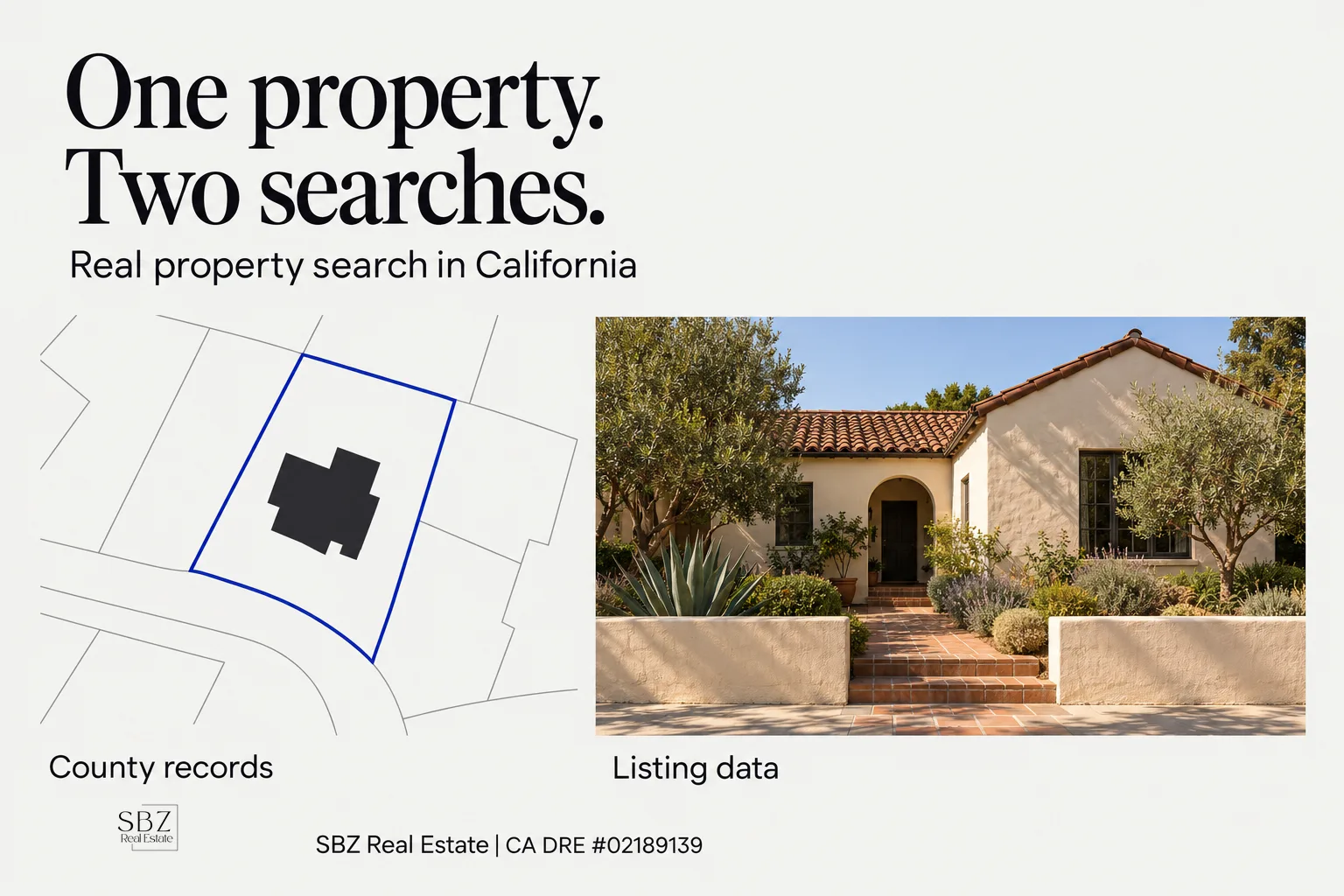

Yes — many Antelope Valley homes carry Mello-Roos taxes, particularly in neighborhoods developed after the mid-1980s in Palmdale and Lancaster. Here's what that means for your budget and how to check before you write an offer.
Mello-Roos is one of those line items that surprises buyers at closing when nobody talked about it upfront. It can add hundreds or several thousand dollars a year to what you actually pay to own a home — and in the Antelope Valley, where a lot of the housing stock came out of major development waves in the late 1980s through the 2000s, it shows up more often than most people expect.
What exactly is a Mello-Roos tax?
Mello-Roos is a special tax authorized under California's Mello-Roos Community Facilities Act of 1982 — named after the two legislators who authored it, Senator Henry Mello and Assemblyman Mike Roos. When a developer builds a new community, they often need to fund infrastructure: roads, sewers, parks, schools, fire stations. Instead of paying for all of it upfront, local government forms a Community Facilities District (CFD) and issues bonds. Those bonds are repaid through a special annual tax levied on homeowners within the district.
That tax appears as a separate line item on your Los Angeles County property tax bill — labeled something like "CFD No. [X]" or "SPECIAL TAX." It is not part of the base 1% property tax rate. It sits on top of it.
How much does Mello-Roos actually add?
Unlike regular property taxes that scale with your home's assessed value, Mello-Roos is typically a fixed annual charge per parcel — sometimes tiered by lot size or land use. The amount is set when the CFD is established and can adjust incrementally each year up to an authorized cap. In many Antelope Valley communities, active Mello-Roos assessments run anywhere from a few hundred to several thousand dollars per year, depending on the district and how many years of bond debt remain.
Here's what that looks like in real terms: a $2,400 annual Mello-Roos charge is $200 per month added to your carrying cost — on top of your mortgage payment, base property taxes, HOA dues, and homeowner's insurance. That's a meaningful number that belongs in your affordability calculation before you fall in love with a list price.
The thing I tell every buyer: always get the estimated total tax bill for the specific parcel before you start running the numbers in your head.
Do Antelope Valley homes actually have Mello-Roos?
Many do, though not all. CFDs are most common in communities built or significantly expanded after 1982 — and because Palmdale and Lancaster saw their largest growth during the late 1980s through 2010s, a substantial portion of the newer housing stock in the area sits inside a district.
Older, established neighborhoods developed before that era typically don't carry Mello-Roos. But in master-planned communities, tract subdivisions, and neighborhoods built during the region's high-growth years, it's the norm rather than the exception. The informal rule of thumb: if the neighborhood has that newer-development look — consistent architectural styles, cul-de-sacs, a community park that feels like it was poured all at once — there's a good chance a CFD is attached.
Quartz Hill is a mix of older and newer development, so coverage varies parcel by parcel. There's no safe assumption by zip code or city; the only reliable answer is checking the actual tax record.
How do I find out if a specific home has Mello-Roos?
There are several ways to confirm before you make an offer:
- Los Angeles County property tax records: Pull the full tax assessment for the address through the LA County Assessor's portal. Any active CFD charges appear as distinct line items — this is the most direct source.
- The Natural Hazard Disclosure (NHD) report: California sellers are required to provide a Mello-Roos disclosure when the property carries this tax. Your agent requests this early in the transaction.
- The required CFD Notice: Under California law, a seller with an active Mello-Roos obligation must deliver a written notice to the buyer. The buyer then has three days to rescind the purchase contract if they were not informed at signing. This is a legal protection — but it works best when you already know what to look for.
- Ask your agent before the offer: A broker with working knowledge of the Antelope Valley market can often identify CFD districts by neighborhood and request the exact annual amounts in advance, so you're not reading the disclosure for the first time during escrow.
Don't treat this as fine print. Mello-Roos is a real cost that changes your monthly number — it belongs in the conversation from day one.
Does Mello-Roos last forever?
No, and that's one of the more practical things to understand about this tax. Mello-Roos bonds are issued for a fixed term, typically 25 to 40 years. Once the underlying bond is retired, the special tax ends. Unlike your base property tax, this one has a sunset built in.
When you're evaluating a home with Mello-Roos, it's worth asking how many years remain on the bond. A district with 30 years left and a $3,000 annual charge is a very different financial picture from one with 8 years left. Both are worth knowing — you just weigh them differently.
Does Mello-Roos affect resale value?
It can. Buyers increasingly look at total carrying cost, not just purchase price. A home with a high Mello-Roos assessment may be priced somewhat lower than a comparable home without one — the market is accounting for the ongoing obligation. Some buyers exclude CFD properties outright. Others are indifferent if the community's infrastructure and amenities reflect what that tax funded.
From a seller's perspective, the right approach is transparency. Know the exact CFD charge. Know the remaining bond term. Present that information proactively — buyers who feel surprised tend to walk, while buyers who were given a complete picture tend to close.
Frequently asked questions
Is Mello-Roos deductible on my federal taxes?
Mello-Roos is generally not deductible as property tax on your federal return because it is classified as a special benefit assessment rather than a general ad valorem property tax. The rules can be nuanced — consult a tax professional for your specific situation.
Can Mello-Roos increase over time?
Yes, up to a capped maximum set when the CFD is created. The actual levied amount can adjust annually, often tied to a fixed escalator or inflation measure. The CFD formation documents for the specific district will spell out the terms — your agent can request these.
Will Mello-Roos show up in my mortgage payment?
Yes. Lenders generally include the full property tax obligation — base tax plus all special assessments — in your monthly escrow impound. The important thing is making sure your lender's pre-approval is based on the actual total tax bill, not a generic estimate. Some lenders use county averages that undercount the CFD portion; verify the number before you lock a rate.
Does new construction in Palmdale or Lancaster always have Mello-Roos?
Not always, but it is common. New construction often sits in recently formed CFDs created to finance the infrastructure that made the development possible. If you're considering new construction in the Antelope Valley, ask the builder's sales team for the exact CFD charges and request the CFD disclosure documents — they are required to provide them.
What's the best way to understand what a home really costs per month before making an offer?
Pull the full LA County tax record for the parcel, confirm the Mello-Roos amount and remaining bond term, add your HOA if applicable, and run the full PITI (principal, interest, taxes, insurance) calculation. At SBZ Real Estate, walking through that complete monthly picture is something we do with every buyer before they sign anything — the goal is to make sure the number you're committing to is the number you were expecting. If you're weighing a move in the Antelope Valley and want to talk through the carrying costs on a specific home or area, a conversation costs nothing: sbzre.com or 818-696-0888.
CA DRE #02189139