
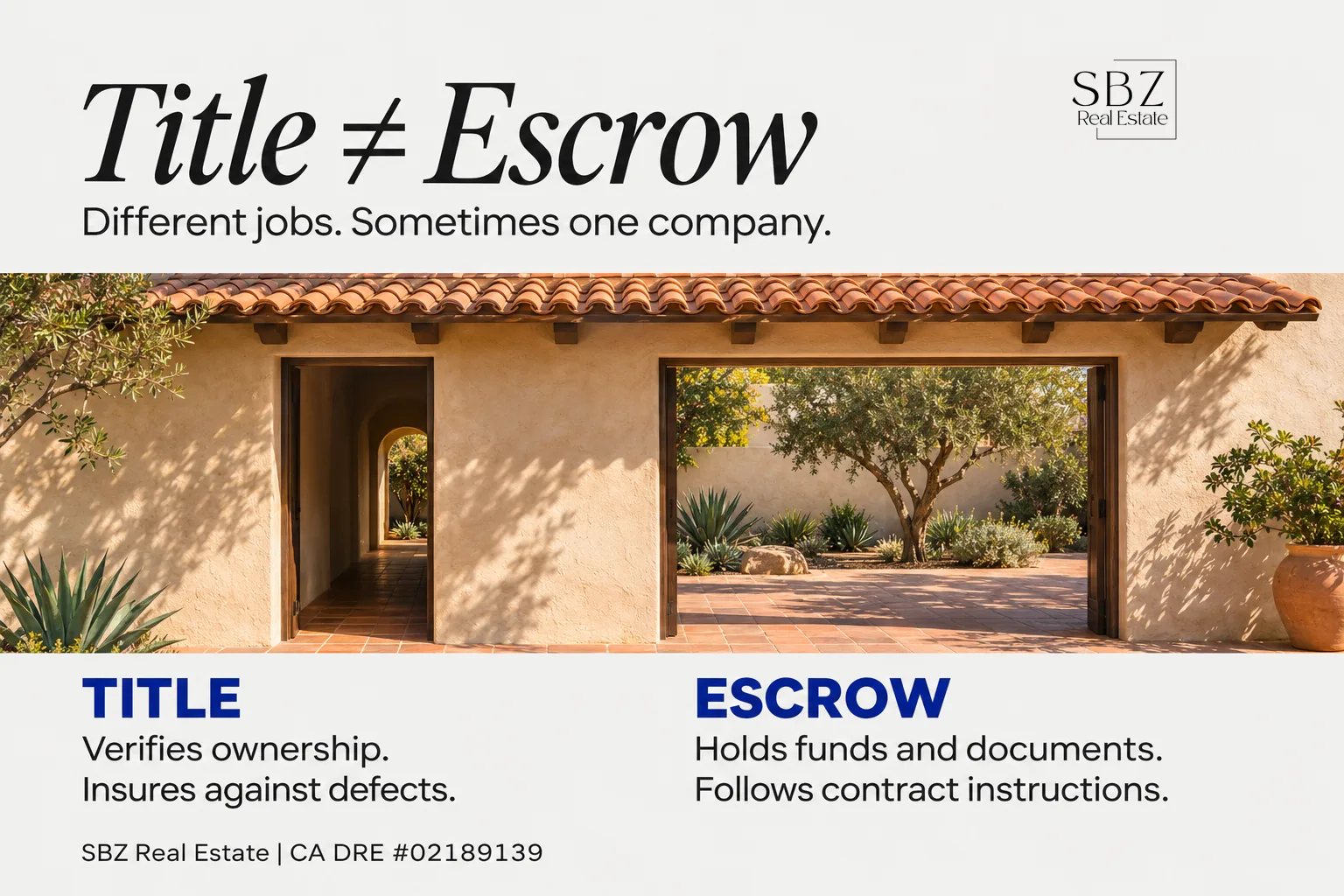
No, title and escrow companies are not the same, even though many companies do both. Escrow is the neutral process that holds money and documents and carries out the instructions in your contract. Title is the work of confirming who legally owns the property and insuring that ownership.
The confusion is understandable. In California the two functions often sit under one roof, you may sign one set of papers at one office, and the names get used interchangeably. Here's what actually matters in practice.
What does an escrow company do?
An escrow company acts as a neutral third party between buyer and seller. It doesn't represent either side. Its job is to follow the written instructions both parties signed and to release money and documents only when every condition has been met.
In real terms, the escrow officer typically:
- Opens escrow once the purchase contract is accepted and receives the buyer's earnest money deposit
- Prepares and collects escrow instructions and the documents each side must sign
- Coordinates with the lender, the title team, and both agents
- Prorates items like property taxes and collects the buyer's down payment and closing costs
- Pays off the seller's existing loan, pays commissions and fees, and disburses the seller's proceeds
- Arranges for the deed to be recorded and the sale to close
If you want the full walkthrough of the process, see What Is Escrow and How Does It Work in California? and Real Estate Escrow Services in California.
What does a title company do?
A title company researches the public record to answer one question: who legally owns this property, and is anything attached to it that could cause trouble? That research is called a title search.
The title team looks for things like unpaid property taxes, existing mortgages or liens, judgments, easements, and errors in prior deeds. Anything found is a "cloud" on the title that has to be cleared before the sale can close cleanly.
The company then issues a preliminary report, followed by title insurance. A lender's policy protects the lender and is required with most financed purchases. An owner's policy protects the buyer against covered title problems that surface later, and it is a one-time premium rather than an ongoing charge.
So why do people think they're the same?
In California, many title insurers also have escrow divisions, and some independent escrow companies work closely with a title partner. When one company handles both, it can feel like a single service. Legally and functionally, though, they are separate jobs with separate people.
There's also a regional wrinkle. Practices vary across the country, and in some states a title company or an attorney runs the closing. In Southern California, a dedicated escrow officer is the usual point of contact, and title is a parallel track running alongside.
Who pays for escrow and title in California?
Costs are negotiable and customs vary by county, so your purchase contract is what controls. As a general pattern, escrow fees are commonly split between buyer and seller, and the seller often pays for the owner's title insurance policy while the buyer pays for the lender's policy. That's a custom, not a rule, and it can shift depending on the deal and the market.
To see where these costs fall on the seller's side, read What Closing Costs Do Home Sellers Pay in California? Buyers can look at Closing Costs for Home Buyers in the Antelope Valley for the other side of the ledger. A seller net sheet will show both line items before you commit.
Can I choose my own escrow or title company?
Yes. In most California transactions, the parties can agree on which companies to use, and the purchase contract usually spells out who selects them. Your broker may suggest firms they've worked with and trust, but you generally aren't locked into a particular one. If you have a preference, say so early, before escrow opens.
When comparing, it helps to ask about:
- Who your escrow officer will be and how quickly they respond
- How fees are itemized, and whether you'll get an estimate up front
- Whether title and escrow are handled in-house or through separate companies
- How they handle wire instructions and fraud protection
On that last point, always confirm wiring instructions by phone using a number you already know to be real, never one from an email alone. Wire fraud targets this exact stage of a transaction.
How do title and escrow work together during a sale?
They move in parallel. Escrow opens, and the title team orders the preliminary report. Problems found in the title search go back to escrow and the agents so they can be resolved, whether that's paying off a lien or correcting a recorded document.
Near closing, escrow needs title to confirm it's ready to insure the sale. Once funds are in and documents are signed, the sale is recorded with the county and the buyer receives the keys. The timing of all this interacts with other contract milestones, such as the appraisal and the inspection period.
If you're buying or selling anywhere from the Antelope Valley to the San Fernando Valley, our team can walk you through each step on the buying side or the selling side. If you're weighing a move, a quick conversation costs nothing.
Frequently asked questions
Is a title company the same as an escrow company?
No. A title company verifies ownership and issues title insurance, while an escrow company holds funds and documents and carries out the contract instructions. Many companies offer both services.
Do I need both title insurance and escrow to buy a house in California?
In a typical financed purchase, yes. Escrow is how the transaction is closed, and a lender will usually require a lender's title insurance policy. An owner's policy is optional but commonly recommended.
Who picks the escrow and title company, the buyer or the seller?
It's negotiable and set out in the purchase contract. Local custom varies, so ask your broker how it usually works in your area and state any preference early.
Is the escrow officer the same person as the title officer?
Usually not. The escrow officer manages the closing and the money, while a title officer examines the property's records and prepares the title report, even if both work at the same company.
Does the escrow company work for the buyer or the seller?
Neither. Escrow is a neutral party that follows the joint instructions both sides sign, so it can't advocate for one side over the other.