
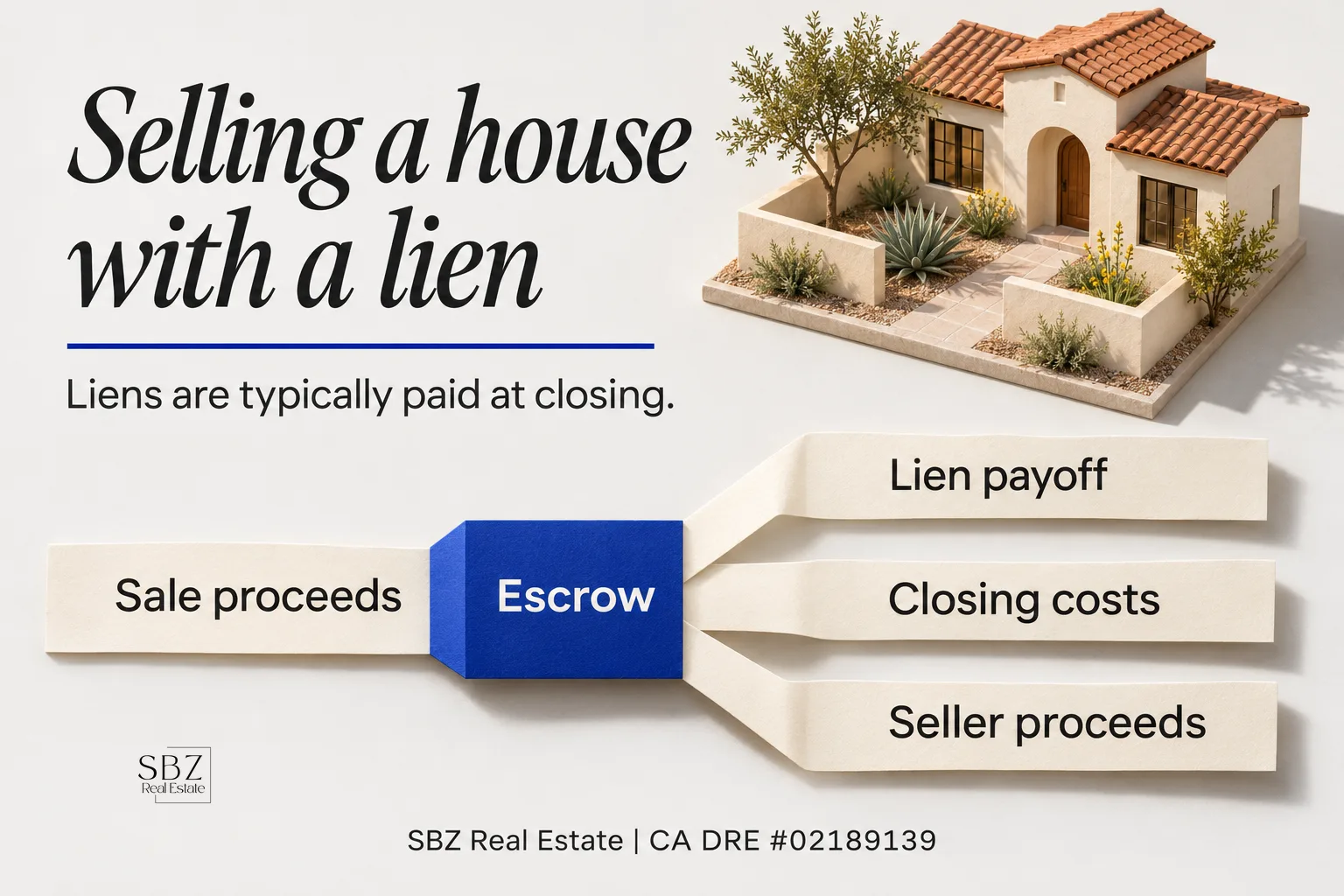
Yes, a house can be sold with a lien on it. In most California sales, the lien is paid off from the seller's proceeds through escrow, and the buyer receives clear title at closing. What changes from case to case is the type of lien, how much is owed, and whether the sale price covers it.
If you've just learned there's a lien on your property, the worry is understandable. It's usually a solvable problem, and the earlier you know the details, the more options you have.
What does it mean to sell a house with a lien?
A lien is a legal claim against your property that secures a debt. It doesn't stop you from owning or selling the home, but it does follow the property. A buyer and their lender won't accept a title that still carries an unpaid claim, so the lien has to be satisfied, or otherwise resolved, for the sale to close.
Most homeowners already sell with a lien without thinking of it that way. A mortgage is a lien. Every time a seller with a loan closes a sale, escrow pays off the lender from the proceeds and records the release.
How do liens get paid off at closing?
The mechanics are routine. Once your home is in escrow, the title company runs a preliminary title report showing every recorded lien against the property. Escrow then requests a payoff demand from each lienholder, which states the exact amount needed to release the claim on the closing date.
At closing, escrow pays those amounts first, then your closing costs, and sends you what's left. If you want to understand the process in more detail, our guide to how escrow works in California walks through each step, and it helps to know what closing costs sellers pay so you can estimate your net.
A seller net sheet is the practical tool here. Putting the payoff figures next to your expected sale price shows what you'd walk away with before you list. Here's what a seller net sheet in California includes.
Which types of liens can affect a sale?
Not all liens behave the same way. These are the ones that come up most often:
- Mortgage and home equity loans. The most common. These are paid off through escrow with a payoff statement from your lender.
- Property tax liens. Unpaid property taxes become a lien on the home and generally must be cleared at closing. Our article on how a tax lien sale works explains what happens if they go unpaid long enough.
- Federal or state tax liens. These come from unpaid income tax and are recorded against your property. They can be paid at closing, and sometimes negotiated, but they take more coordination. We cover this in selling a house with a tax lien in California.
- Judgment liens. If a creditor won a court judgment against you and recorded an abstract of judgment in the county, it attaches to real property you own there. These can remain in force for years unless paid or released.
- Mechanic's liens. A contractor or supplier who wasn't paid for work on the property can record one. They're a common surprise after a remodel.
- HOA liens. Unpaid assessments can become a lien. Escrow typically requests a demand from the association.
What if I owe more than the house will sell for?
This is the harder scenario. If the payoffs add up to more than the sale price, the sale can't close with a clean title unless the gap is covered. You generally have three paths.
First, you can bring cash to closing to make up the difference. Second, you can negotiate with the lienholders, some of whom will accept a reduced payoff to release their claim. Third, if the main loan is the problem, a lender may approve a short sale. Our guide on what a short sale is covers how that works and what it means for you.
Every situation is different, and outcomes depend on the lienholders involved. It's worth speaking with a real estate attorney or tax professional when a judgment or tax debt is part of the picture.
How do I find out what liens are on my property?
Start with a title search. A title company can pull the recorded documents and show exactly who has a claim and for how much. Here is how a title search works in California if you want to understand what the report shows. You can also review property deed records through the county recorder.
Do this before you list, not after you're under contract. A lien that surfaces mid-escrow can slow things down or put the deal at risk, while one you've already planned for is just a line item on the closing statement.
Does a lis pendens work the same way?
Not quite. A lis pendens is a recorded notice that a lawsuit involving the property is pending. It isn't a debt claim in itself, but it warns buyers that the outcome of the case could affect title, which makes most buyers and title insurers cautious. We explain that situation in whether you can buy a house with a lis pendens. If one is recorded against your home, resolving or removing it usually needs to happen before closing.
What should sellers do first?
Here's what I'd tell any seller who has just discovered a lien:
- Get a current title report so you know every lien, not just the one you've heard about.
- Request payoff figures from each lienholder to see the real amounts, including interest and fees.
- Compare the total to a realistic sale price using a net sheet.
- Decide your path: pay at closing, negotiate, bring funds, or explore a short sale.
- Choose a title and escrow team that has handled this before. The way you choose a title company matters more when title isn't clean.
Liens also come up in other life events. If you're selling during a divorce or selling inherited property, recorded claims against the home are often part of the picture, and they're handled the same way: identified early and resolved through escrow.
If you're weighing a sale and aren't sure what's recorded against your home, a quick conversation costs nothing. You can reach our team here, or learn more about selling with SBZ Real Estate.
Frequently asked questions
Can you sell a house with a lien on it without paying it off first?
Usually yes, because the lien is paid at closing from your proceeds rather than beforehand. Escrow handles the payoff and the lienholder records a release.
Will a lien stop a buyer from getting a loan?
A buyer's lender will require clear title, so any lien must be paid or otherwise resolved at closing. That's why identifying liens early matters.
Can a lien be removed if the debt is wrong?
If you believe a lien was recorded in error, you may be able to dispute it with the lienholder or in court. An attorney can advise on your specific case.
Does a lien mean I can't sell my house in California?
No. A lien doesn't block a sale by itself. It only means the debt has to be satisfied, negotiated, or covered as part of the transaction.
What happens to the lien after the house sells?
Once escrow pays the payoff amount, the lienholder issues a release and it's recorded, so the claim no longer attaches to the property.