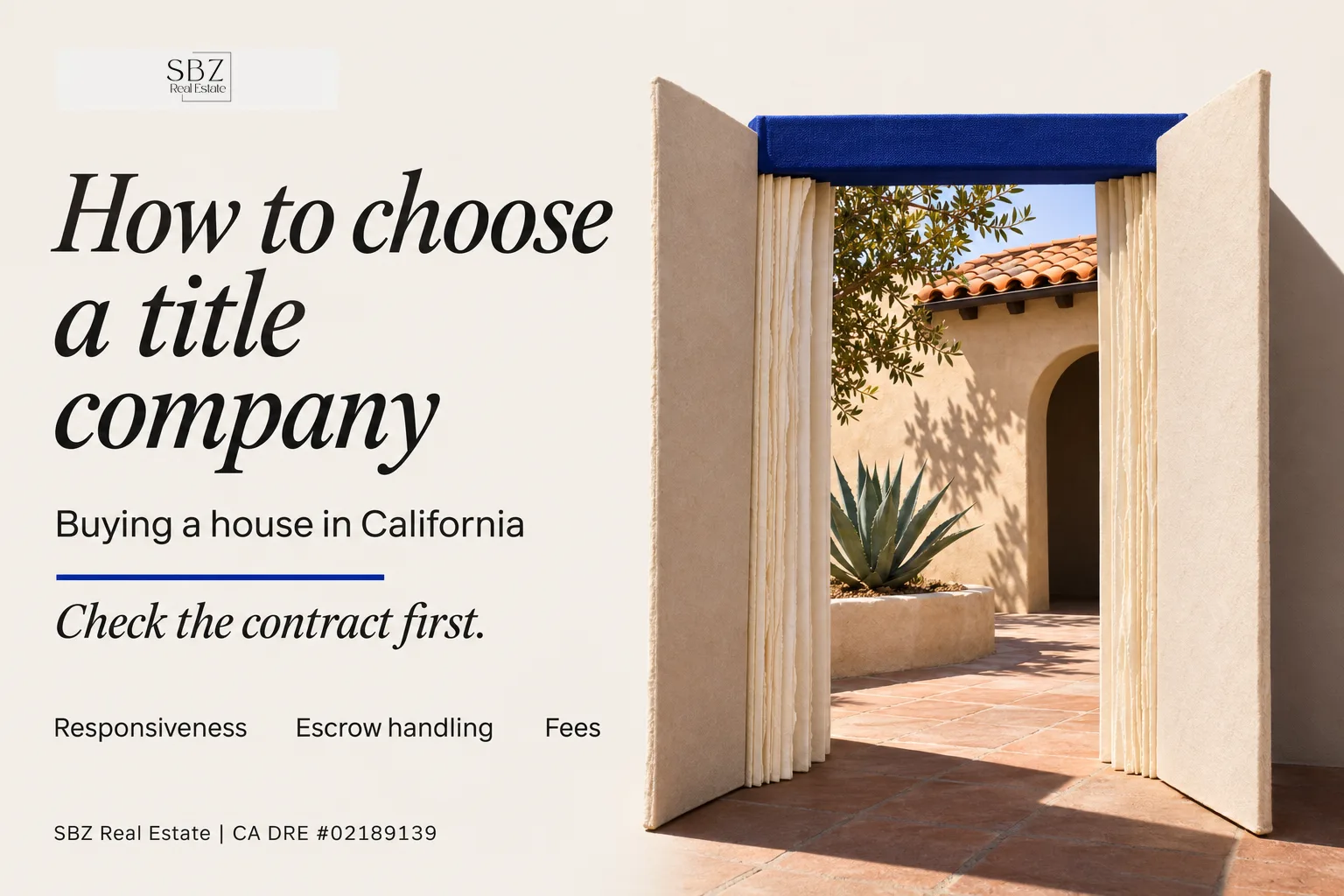
Choose a title company by first finding out who gets to pick it in your contract, then comparing a few candidates on responsiveness, how they handle escrow, and the full cost of their services. Most buyers never think about this decision until it's already been made for them, which is why it's worth understanding before you write an offer.
Here's what actually matters in this market, and what the thing most buyers miss turns out to be: the title company does quiet, high-stakes work, and a good one makes your closing feel uneventful.
What does a title company actually do for a buyer?
A title company researches the public record on the property you want to buy, looking for ownership history, liens, unpaid taxes, easements, and anything else that could cloud your right to own it. It reports what it finds in a preliminary report, and it issues title insurance that protects against covered problems that surface later.
In California, many title companies also provide escrow services, meaning they hold the money and documents and carry out the instructions of the buyer and seller. If you're unsure where one role ends and the other begins, our guide on whether title and escrow companies are the same lays out the difference, and our overview of how escrow works in California covers the process from open to close.
Who actually chooses the title company?
It depends on your contract and local custom. In Southern California, the purchase agreement typically names who orders title and who pays for the owner's policy, and those allocations vary by county and are negotiable. The party responsible for paying often has the stronger say in the choice.
That means you may have more or less influence depending on the deal. If you want a particular company, say so when your agent drafts the offer rather than after you're in contract. Your agent can tell you what is customary where you're buying, and our broker team at SBZ Real Estate walks buyers through this before an offer goes in.
What should I compare between title companies?
Title insurance is a regulated product, and the policy itself is not where companies differ most. The difference shows up in the people and the process. Here is what to weigh:
- Responsiveness. Do they return calls and emails the same day? A slow escrow officer can put a closing date at risk.
- Escrow experience. If the same company is handling escrow, ask who your escrow officer will be and how many files they manage at once.
- Clarity on fees. Ask for an itemized estimate of the title, escrow, and recording charges. Fees are not identical across companies, and escrow fees in particular can vary.
- Local knowledge. A company that closes regularly in your area knows the county recorder's habits, the common easements, and the quirks of older tracts.
- Communication style. Some buyers want every update by email; others want a phone call. Match the company to how you work.
- Document handling. Ask how they deliver the preliminary report and how they walk buyers through it.
For a closer look at the escrow side, see our breakdown of real estate escrow services in California.
What questions should I ask before I commit?
A short phone call usually tells you what you need to know. Consider asking:
- Are you a title insurer, or an agent for an underwriter, and who is the underwriter?
- Who will be my escrow officer, and what is the best way to reach them?
- Can you send an itemized estimate of title, escrow, and recording fees?
- Which endorsements might apply to my purchase, and what do they cost?
- How do you protect buyers from wire fraud?
- What is your typical timeline for delivering the preliminary report?
A professional company answers these plainly. Vague answers or pressure to decide quickly are worth noticing.
How should I handle the preliminary report?
Read it. The preliminary report lists exceptions to coverage, existing liens, recorded easements, and property tax information. Your agent and escrow officer can help you interpret items you don't recognize, and anything unexpected should be raised early, while you still have options under your contract's contingency periods.
If you want to look at parcel information yourself, our guide to real property search in California explains where public property records live. It's also helpful to understand who is responsible for property taxes after a sale, since taxes are prorated at closing and appear on your settlement figures.
What does it cost, and who pays?
Costs generally include the title insurance premium, escrow fees, and recording and related charges. Who bears each cost is a negotiated term in your contract and varies by county and by deal. Lenders also usually require a separate lender's policy, which is a different product from the owner's policy that protects you.
Rather than guessing, ask for the numbers in writing early. Our guide to closing costs for home buyers in the Antelope Valley walks through the line items buyers typically see, and it's a good companion when you review an estimate.
When is it worth stepping in and requesting a different company?
If the contract gives you the choice, switching is simple before escrow opens and harder afterward. If the choice sits with the seller, you can still ask, and a good agent will tell you honestly whether it's worth raising. Reasons that tend to justify a conversation include a slow escrow officer, unclear fee estimates, or a history of closing problems you've heard about firsthand.
If you'd like to talk it through for a specific purchase, a quick conversation costs nothing. You can reach out here and we'll help you sort out who's choosing what before you sign.
Frequently asked questions
Can I choose my own title company when buying a house?
Often yes, but it depends on your purchase agreement and local custom. The party who pays for the owner's policy commonly has the stronger say, so raise your preference when the offer is drafted.
Does the title company I pick affect my closing timeline?
It can. A responsive escrow officer and a timely preliminary report keep things moving, while slow communication can create avoidable delays near your closing date.
Is title insurance required when I buy a house?
If you finance the purchase, your lender will almost certainly require a lender's policy. An owner's policy is separate and protects you, and most buyers choose to have one.
Are title companies and escrow companies the same thing in California?
Not exactly. Title companies research and insure ownership, while escrow companies hold funds and documents and carry out the transaction instructions. Many title companies offer both services under one roof.
How do I protect myself from wire fraud at closing?
Always confirm wiring instructions by calling a phone number you already trust, never one in an email. Ask your title or escrow company how they verify instructions before you send any funds.