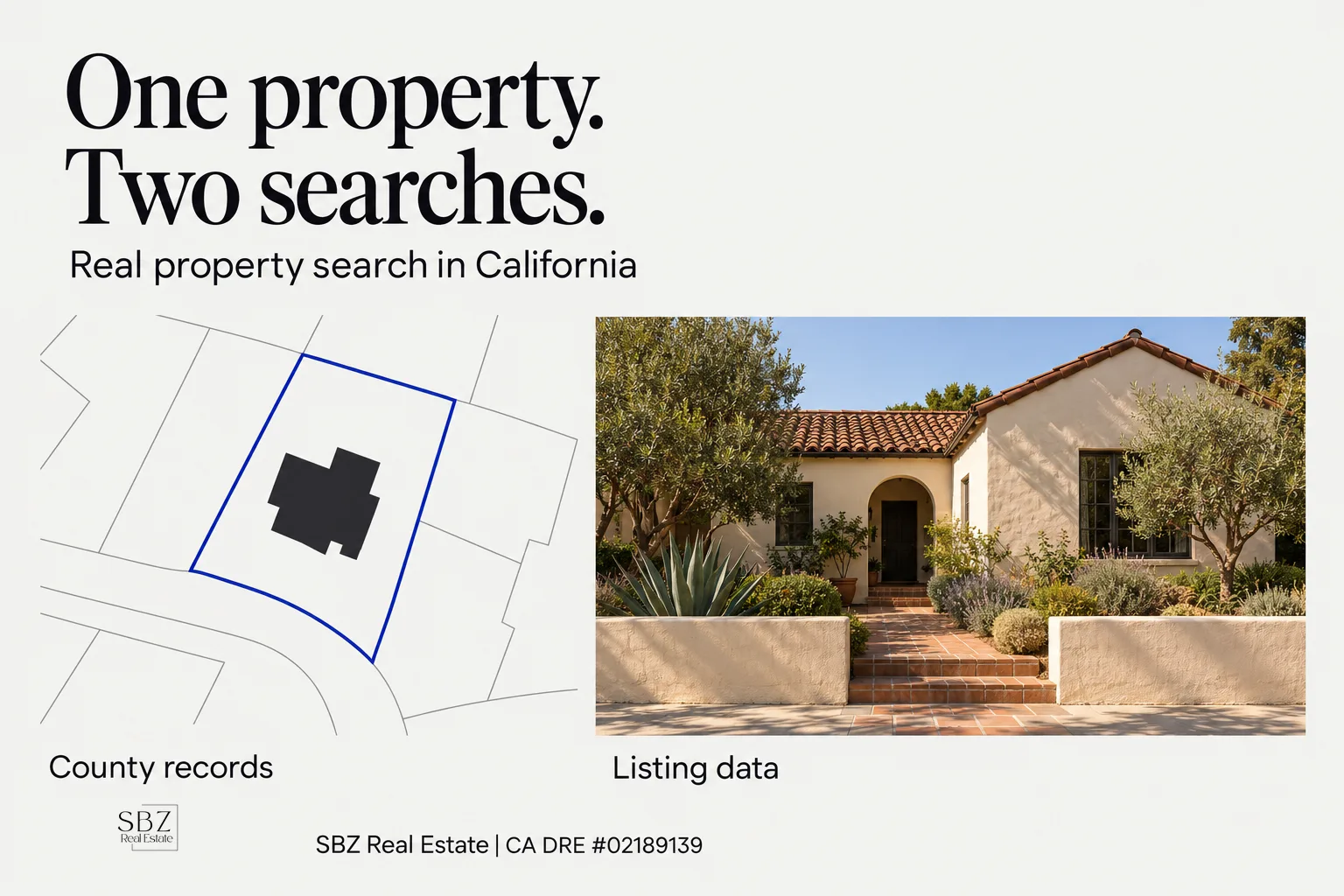
A real property search in California means looking a property up in two places: county records, which show parcel, ownership and tax facts, and listing data, which shows what is for sale and at what price. Neither source tells the whole story alone. Used together, they give you a clear picture of a property before you make an offer or set a price.
This guide covers the Southern California version of that search, where the county, not the state, holds most of the records you'll want.
What is a real property search?
A real property search is a lookup of a specific parcel of land and anything built on it. "Real property" is the legal term for land plus permanent structures, as opposed to personal property like furniture. Depending on your goal, you might be checking who owns a parcel, what it's assessed at, whether a lien is recorded, or whether a similar home is on the market.
Most people run the search for one of three reasons: they're thinking of buying, thinking of selling and want context, or they've received a letter or tax bill and want to confirm the details.
Where do I search property records in California?
California has no single statewide property database. Records are kept at the county level, so the county where the property sits determines where you look. For most of the Antelope Valley, San Fernando Valley, Glendale, Burbank and Pasadena, that's Los Angeles County. If you're researching a property elsewhere in the state, you'll need that county's offices instead.
In Los Angeles County, three offices matter most:
- The County Assessor maintains parcel records: the parcel number, lot and building characteristics, assessed value and the property's use code.
- The Registrar-Recorder/County Clerk holds recorded documents such as grant deeds, deeds of trust, liens and releases.
- The Treasurer and Tax Collector shows the property tax bill and whether installments are paid.
Each office has an online search, and the Assessor's is usually the best starting point. For a wider view of how the county's market is organized, see our guide to how the Los Angeles County market really works.
What is an APN, and why does it matter?
The Assessor's Parcel Number, or APN, is the identifier every county office uses for a parcel. In Los Angeles County it is a ten-digit number written in three parts: book, page and parcel. If you have the APN, you can pull up the right record in seconds, with no guessing about spelling or unit numbers.
If you only have an address, the Assessor's search can usually find the APN for you. Once you have it, write it down. It's the cleanest way to follow the same property across the Assessor, the Recorder and the tax collector.
What will a property record actually show?
A parcel record typically gives you the basics:
- Situs address and legal description
- Lot size and year built
- Number of bedrooms, bathrooms and building square footage as the county has them on file
- Use code (single-family, condo, duplex and so on)
- Assessed land and improvement values
- Recorded sale or transfer information
Here is the thing most people miss: the county's square footage and bedroom count come from permits and assessor records, not from a walk-through. They can be out of date, especially on older homes with additions. Treat the record as a starting point and confirm anything that affects value.
Is the assessed value the same as market value?
No, and this trips up buyers constantly. Under Proposition 13, a property's assessed value generally starts at the purchase price and rises by a limited annual percentage, so a home owned for many years can be assessed far below what it would sell for today. The reverse can also be true for a recent purchase.
That means the assessed value is a tax number, not an appraisal. To understand what a home might sell for, you need recent comparable sales, which is what a comparative market analysis does. Ownership changes can also reset the assessment, so it's worth understanding how Prop 19 handles property tax base transfers if a move is on your mind.
How do I search for homes that are for sale?
Listing data is a separate world from county records. Public listing sites pull from the multiple listing service, or MLS, but they can lag behind it, and some sites show estimates that are not the same as a list price. A broker with MLS access can see current status, price changes and sale history in real time.
If you're searching in a specific area, start with the local community pages, such as Palmdale, Burbank or Sherman Oaks, then narrow by price range and property type. Not every home is publicly marketed, either. Some are sold quietly, which is covered in our piece on off-market homes.
What can a property search not tell me?
Records are useful, but they have limits. A search will not tell you:
- The true condition of the roof, foundation, plumbing or electrical
- Whether past work was permitted and finaled
- What the home would sell for today
- Unrecorded issues, such as an informal agreement with a neighbor
Condition is the biggest gap. A home inspection fills it. Title is the other: a title company's preliminary report, ordered once you're in escrow, looks for recorded liens, easements and ownership problems that a casual search can miss.
Are property searches private?
Property records are public in California, which means a buyer's name can appear on a recorded deed. People who care about discretion often plan for this before closing. Our article on buying a home privately through trusts and LLCs explains the general approach, and a tax or legal professional should advise on the specifics for your situation.
A simple order for your search
If you're starting from scratch, this sequence works well:
- Find the address and confirm the APN on the Assessor's site.
- Review the parcel record for lot, building and use details.
- Check the tax bill status with the Treasurer and Tax Collector.
- Look at recorded documents for liens or recent transfers.
- Pull recent comparable sales through a broker rather than relying on an automated estimate.
- Schedule an inspection before you commit.
If you'd like a second set of eyes on any of this, buying with a broker means someone who reads these records for a living does the digging with you, and a conversation is easy to start through the contact page.
Frequently asked questions
Is there one statewide real property search for California?
No. California property records are kept by each county, so you search the Assessor, Recorder and tax collector in the county where the property sits. For most of our service area, that is Los Angeles County.
Can I find out who owns a property in Los Angeles County?
Generally, yes. Ownership appears in recorded documents such as grant deeds, which are public. The Assessor's record also lists the owner of record, though it may lag behind a very recent sale.
Why does the county show a different square footage than the listing?
County figures come from permits and assessor data, while listings may reflect an appraisal, a builder's plans or the seller's measurements. Differences are common on homes with additions, so confirm anything that matters to your decision.
Does a property search show whether a house has liens?
Recorded liens appear in the Recorder's documents, but a full picture requires a title search. A title company's preliminary report is the dependable way to confirm what encumbers a property.
Is assessed value what my home is worth?
No. Assessed value is the figure used to calculate property tax and often differs from market value. Recent comparable sales are the better guide to what a home might sell for.