
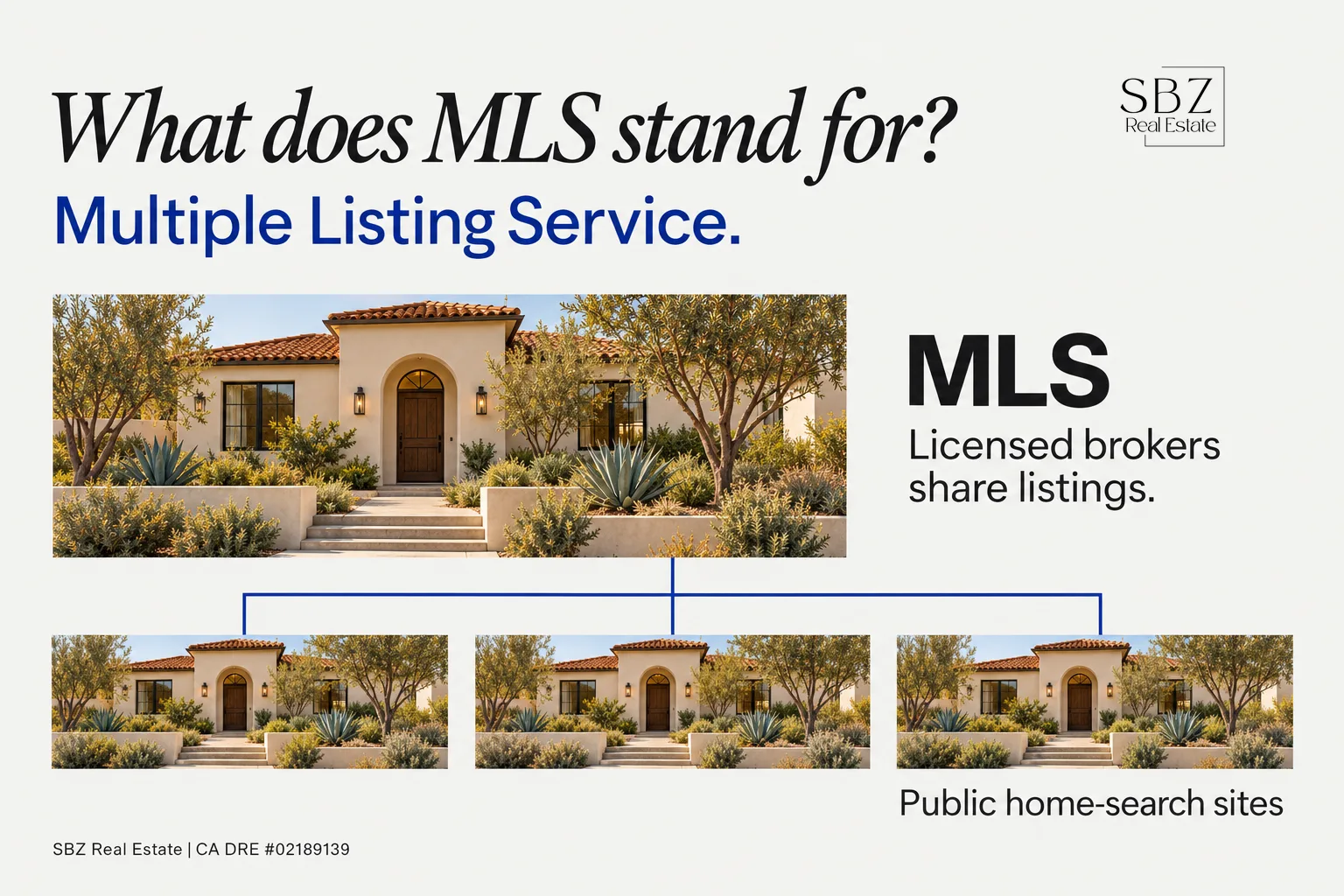
MLS stands for Multiple Listing Service. It's a private database where licensed real estate brokers and agents post the homes they're selling and look up homes for their buyers. If you've scrolled listings on a big home-search site, most of what you saw probably started in an MLS.
Once you understand how the MLS works, a lot of the home-buying and selling process gets easier to follow. That includes why your agent sees things you don't, why some homes never show up publicly, and why where your home is listed can matter as much as the asking price.
What is the MLS, in plain terms?
An MLS is a shared listing system run by a regional group, usually a local REALTOR® association or a group of them. Brokers who join agree to a common set of rules. They post accurate listing details, update the status as a home moves from active to pending to sold, and let other member brokers show and sell the property.
That last part is the reason the MLS exists. Before shared databases, every brokerage kept its own listings, and buyers had to visit office after office to see what was for sale. The MLS put the whole local inventory in one place, so any participating broker can bring a buyer to any listed home.
There's no single national MLS. Many regional systems operate across the country, and Southern California has several of its own. Some of them share data with each other, so a broker in the San Fernando Valley can usually see listings in the Antelope Valley or Orange County without trouble.
What information is actually in an MLS listing?
An MLS listing holds a lot more than what you see on a consumer website. A typical record includes:
- Property basics: address, beds and baths, square footage, lot size, year built, and the property type
- Pricing history: list price, any price changes, and the final sale price once the home closes
- Status: active, coming soon (where the rules allow it), pending, contingent, sold, withdrawn, or expired
- Days on market: how long the home has been listed, tracked by the system
- Photos, descriptions, and disclosures: some of these are public, and some are visible only to agents
- Showing instructions: lockbox details, appointment rules, and occupancy notes for the listing agent's peers
- Agent-only remarks: private notes between brokers, such as "seller prefers a 45-day escrow"
The sold data is where much of the real value sits. When a broker prepares a comparative market analysis, the sold, pending, and expired records in the MLS do most of the work. They show what buyers actually paid, not only what sellers hoped for.
Is the MLS the same as Zillow or Redfin?
No, though the two are connected. Public sites like Zillow, Redfin, and Realtor.com aren't MLSs. They show listing data that MLSs share with them through data feeds, often under arrangements called IDX (Internet Data Exchange).
In real terms, the MLS is the source and the public sites are the window. Data in that window can lag behind or leave things out. A home can show as active online after it has gone pending, or a status change can take time to come through. Private agent remarks and showing details never reach the public sites at all.
Our own community market guides draw on public sources like Redfin and Zillow, because they're useful for spotting broad trends. When it's time to price a specific home or write an offer, though, a broker goes back to the MLS record itself.
Can a regular buyer or seller access the MLS?
Not directly. Full MLS access is limited to licensed members who pay dues and agree to follow the system's rules. That's one practical reason people work with a licensed broker. If you're unclear on who can do what, our guide to real estate agent vs. broker vs. Realtor titles explains the differences.
Buyers usually get the next best thing. Your agent can set up automatic searches straight from the MLS, so new listings that fit your criteria reach your inbox quickly. Often that's faster than waiting for the public sites to update. If you're starting a search, our home buying page explains how we set this up.
Why does the MLS matter when you're selling?
For most sellers, the MLS is where buyers find their home. Listing it puts the property in front of every participating broker in the region, along with all the buyers those brokers are working with. Here's what most sellers miss: the buyer for your home is more likely to come through another brokerage than to find you on their own.
Some practical points to know:
- The listing is your first showing. Good photos, an accurate description, and correct details (square footage, upgrades, HOA information) shape who books a showing.
- Days on market follow you. A listing that sits gets noticed by other agents. That's one reason pricing your home correctly from the start matters so much.
- Status changes send signals. A price cut, a pending sale that falls out of escrow, or a withdrawn listing all show up in the history that other brokers can see.
- Compensation isn't shown in the MLS anymore. Under national industry rule changes that took effect in 2024, offers of buyer-broker compensation are no longer posted in the MLS. Those terms are now handled through separate written agreements.
Our selling page walks through how we prepare a listing before it goes live, and our article on what a real estate agent does when selling your house covers the full process.
What about homes that aren't on the MLS?
Not every sale goes through the MLS. Some sellers choose an off-market or quiet sale, often for privacy, timing, or because they want to test a price without a public record of it. A seller who sells by owner without a broker may skip the MLS too, although some pay a flat fee to be listed.
Those choices involve trade-offs. Keeping a home off the MLS usually means fewer buyers see it, and that can affect the result. Many MLSs also have rules on how long a member broker can market a home publicly before it has to be entered into the system. If privacy is your priority, our guide to off-market homes for sale explains how quiet listings work and what they cost you in exposure. For clients who need discretion, including entertainment, sports and public figures, our private client brokerage page describes how we handle confidential sales. An NDA is available on request.
Does the MLS work differently across Southern California?
The basic idea is the same everywhere: shared listings, cooperating brokers, common rules. Local details still vary. Rules on status categories, "coming soon" periods, and data sharing can differ from one system to another. That's one reason local experience counts. A broker who works the communities we serve every day knows how listings in Palmdale or Burbank tend to show up, how quickly statuses update, and which comparable sales actually fit a given home.
Frequently asked questions
What does MLS stand for in real estate?
MLS stands for Multiple Listing Service. It's a private, members-only database where licensed brokers share property listings and sold data so that any participating broker can help sell any listed home.
Is there one MLS for all of California?
No. California has several regional MLSs, many of them run by local REALTOR® associations. Many of them share data with each other, so brokers can usually see listings well beyond their own area.
Can I search the MLS myself without an agent?
Full access is limited to licensed members. Public sites show much of the same data through shared feeds, but they can lag behind and don't include agent-only details. A broker can set up direct MLS searches that send listings to you automatically.
Do I have to list my home on the MLS to sell it?
No. Off-market sales and for-sale-by-owner sales are legal options. Skipping the MLS usually limits how many buyers see your home, so weigh what you gain in privacy or speed against that reduced exposure.
How long does it take for a listing to show up on Zillow after it hits the MLS?
It varies by system and feed. Often it's fairly quick, but status changes in particular can take time to show up on public sites. The MLS record is always the most current source.
If you're getting ready to buy or sell and want to see how the MLS fits into your plans, a quick conversation costs nothing. Reach out to our team at 818-696-0888 or hello@sbzre.com, and we'll go through what makes sense for your move.
