Real estate in Los Angeles County is not one market. It is dozens of distinct local markets that differ in price, inventory, property type, commute, and pace, so the right move depends far more on the specific area than on any countywide headline. Here's what actually matters when you're buying or selling here.
Why does a countywide number tell you so little?
Los Angeles County stretches from the beaches to the high desert. A single "median price" or "average days on market" blends together hillside homes, valley ranch-style houses, condos, new construction, and desert-edge single-family lots. No one buys the average.
In real terms, two homes a short drive apart can sit in markets that behave differently. One may draw multiple offers in its first weekend while the other takes patient pricing and good presentation. If you see a county-level statistic in the news, treat it as context, not a forecast for your street. For a broader read on where forecasts point, see our look at housing market predictions for Southern California, and remember that forecasts are educational, not promises.
What are the main regional markets within the county?
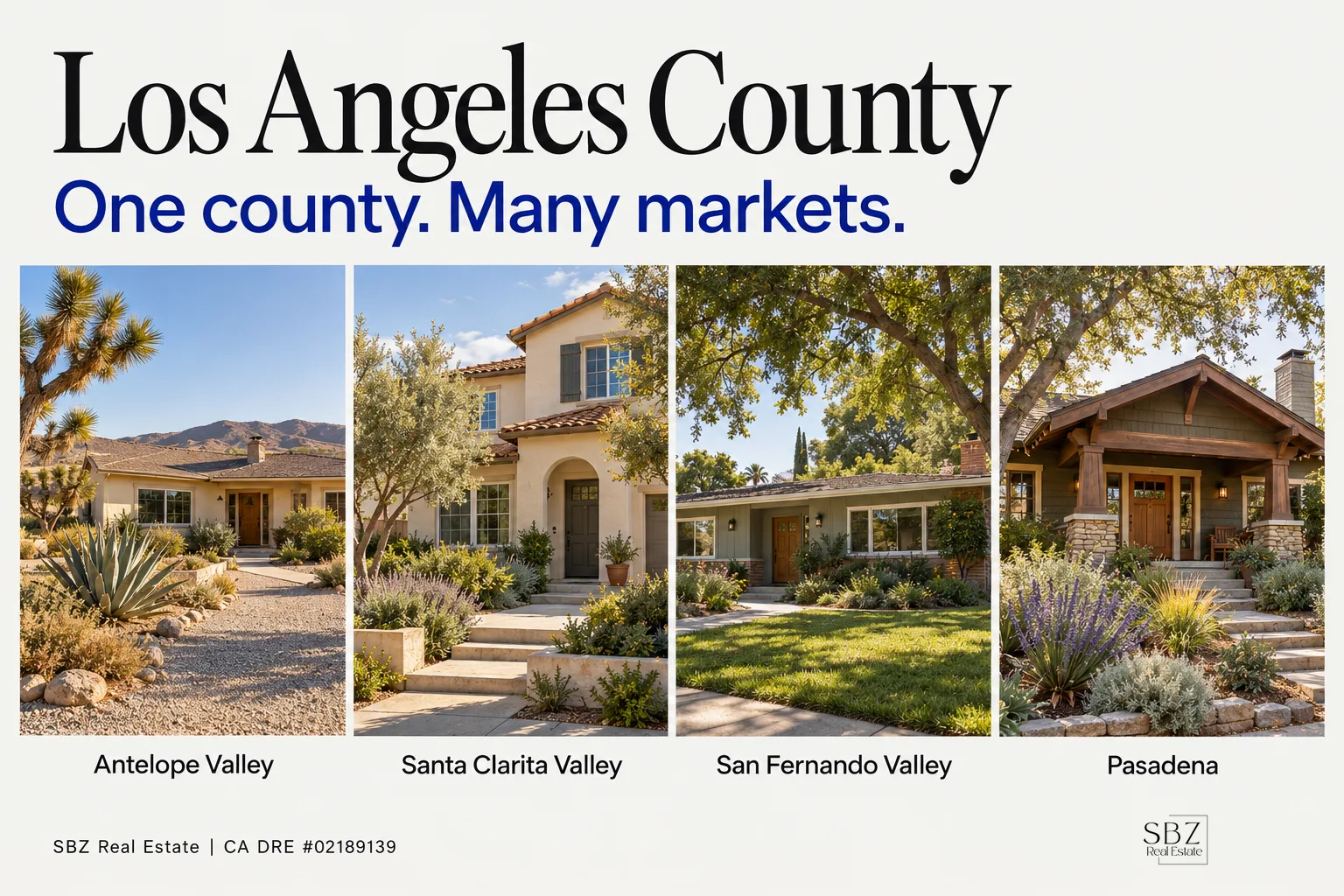
It helps to think in regions, then drill into neighborhoods.
- Antelope Valley. Communities like Palmdale, Lancaster, and Quartz Hill offer larger lots and a different price point than the urban core, with a longer commute for those who travel south.
- Santa Clarita Valley. Santa Clarita is a planned-community market where newer construction and association rules are common considerations.
- San Fernando Valley. Areas such as Sherman Oaks and Studio City mix single-family streets, hillside properties, and condos close to the studios and the 101 corridor.
- Glendale, Burbank, and Pasadena. Established, walkable-to-amenities cities with their own city rules, permitting practices, and housing stock, much of it older.
Our communities page gives a starting point for each area we serve. Orange County, including Irvine, is a separate county with its own dynamics, so don't assume what you learn here transfers directly.
What should buyers know about buying in Los Angeles County?
Start with the questions that narrow the map: your budget, your commute, the property type you want, and how much work you're willing to take on. Those four answers eliminate most of the county before you open a single listing.
Then keep these in mind:
- Property age matters. Older homes are common, and inspections often surface roofing, plumbing, electrical, or foundation questions. Budget time to understand them rather than reacting to them.
- Ongoing costs vary by location. Property tax in California starts from a base rate set by Proposition 13, but voter-approved assessments and, in some newer developments, Mello-Roos can add to the bill. Our explainer on Mello-Roos taxes shows how to spot them.
- Down payment and closing costs depend on your loan and price. Our guide on how much to put down on a house walks through the trade-offs.
- Not every home is publicly advertised. Some properties trade quietly. Here's what to know about off-market homes and how to find them.
When you're ready to build a search around your priorities, our buying page explains how we work with buyers.
What should sellers know about selling in Los Angeles County?
The thing most sellers miss is that price is set by the immediate neighborhood and comparable sales, not by what a friend's house in another city fetched. A thoughtful pricing strategy starts with recent, truly comparable sales and an honest look at your home's condition.
From there, preparation matters. Focus on repairs a buyer or inspector will notice, and skip cosmetic projects that won't change the conversation. We cover how to price your home to sell in Los Angeles in more detail. Your net proceeds also depend on commissions, closing costs, and possibly capital gains, so ask for an estimate early. Outcomes depend on the property, the timing, and the market, and no one can responsibly promise a price or a timeline.
If you're weighing a sale, our selling page outlines the process from first conversation to close.
How do you choose an agent or broker in a county this large?
Because the county has a very large number of licensees, the number itself is not useful. What matters is local knowledge of your specific area and who actually does the work on your transaction. Ask who your day-to-day contact will be, how they price and negotiate, and how they communicate when things get complicated.
California's Department of Real Estate keeps a public license lookup, so you can confirm that anyone you hire holds an active license. It's also worth understanding the titles: our guide to real estate agent vs. broker vs. Realtor explains what each one means. For a fuller checklist, read how to choose a real estate agent in Southern California.
What about commercial real estate in Los Angeles County?
Commercial property, such as office, retail, and industrial space, is a different discipline from residential. It is valued on income and lease terms, financed differently, and governed by different contracts. SBZ Real Estate is a residential brokerage, so if you're searching for commercial space, you'll want a specialist in that property type.
If you're an investor evaluating residential rentals, you can start with how real estate investors build a Southern California rental portfolio with a broker. The income concepts are also worth learning, and our plain-English guide to net operating income is a good place to begin.
Frequently asked questions
Is Los Angeles County real estate one market?
No. The county contains many local markets with different price levels, property types, and buyer demand. A neighborhood-level view is far more useful than a countywide average.
How many real estate agents are in Los Angeles County?
The number changes constantly as licenses are issued and lapse, so any figure quickly goes out of date. For a current, verified answer, use the California Department of Real Estate's public license lookup. More usefully, choose someone with real knowledge of your specific area.
Where can I find real estate for sale in Los Angeles County?
Public listing sites show most homes on the market, and a local broker can also tell you about properties that aren't widely advertised. Narrow your search by region and budget first, then compare neighborhoods in person.
Do you handle commercial real estate in Los Angeles County?
No. SBZ Real Estate focuses on residential buying and selling. For commercial property, look for a broker who specializes in that asset class.
What's the best first step if I'm thinking of moving?
Get clear on your timeline, budget, and must-haves, then talk with a local broker about your specific area. If you're weighing a move, a quick conversation costs nothing. You can reach us through our contact page, or learn more about SBZ Real Estate first.