
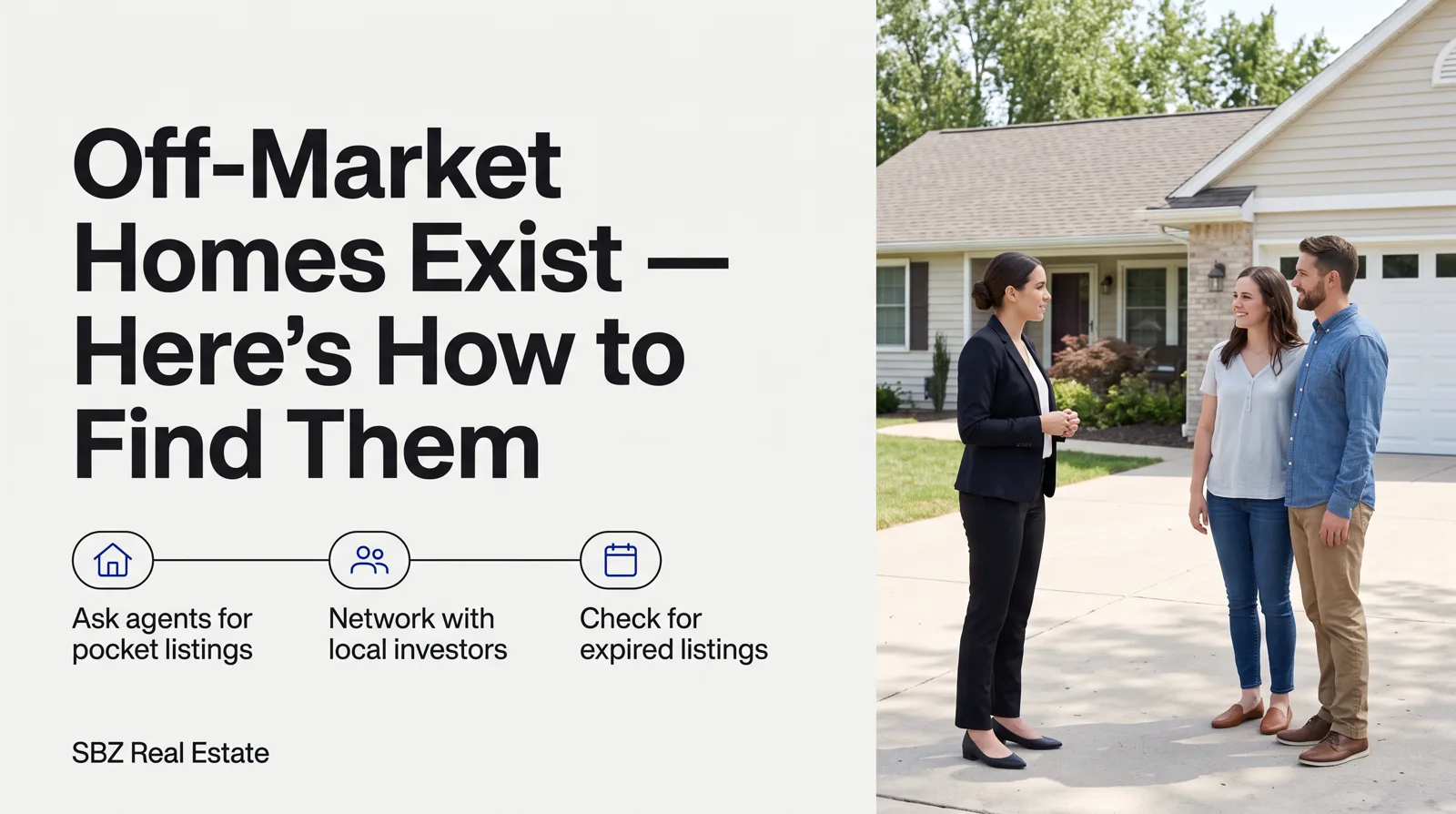
Off-market homes are properties that sell without ever appearing on public listing platforms like Zillow or Redfin — and for the right buyer, they represent one of the quieter advantages of working with a well-connected local broker. They're not secret, exactly, but they don't announce themselves either.
This guide breaks down what off-market actually means, why sellers choose it, and the practical ways buyers in Southern California can access these opportunities.
What does "off-market" mean for a home for sale?
The term is straightforward: an off-market home is one where the seller is not publicly advertising the property, at least not yet. It won't appear on Zillow, Realtor.com, or any aggregator that pulls from the public listing feed. The transaction happens through direct connections — an agent's network, a personal referral, a buyer who reached out before the sign went up.
Off-market doesn't mean distressed or discounted. Some thoughtfully priced homes change hands this way because the seller has a specific reason to keep things quiet. It's a category, not a condition.
There's also a related phrase worth knowing: pre-market or pocket listing, which refers to a home that will eventually list publicly but is being shown to select buyers first. These are different from a true off-market sale, but the buyer experience is similar — you get access before the broader market does.
Why do sellers choose to go off-market?
Sellers opt for off-market for a handful of real reasons, and understanding them helps buyers approach these conversations with the right frame of mind.
Privacy and minimal disruption. A homeowner who still lives in the property may not want a steady stream of showings. Off-market means fewer strangers walking through, on their timeline, without the stress of staging every weekend.
Testing the price. Some sellers want to gauge genuine buyer interest before committing to a full public launch. If they get a strong offer, they take it. If the response is soft, they reset. This is more common in higher-price-point markets where a long days-on-market figure can follow a listing like a shadow.
Timing flexibility. Estate situations, relocations, and certain life transitions sometimes move faster than a traditional listing timeline allows. Off-market can close on a schedule that fits the family's needs, not the MLS calendar.
Referral relationships. Some sellers simply trust their agent's network to surface the right buyer — someone serious, pre-approved, and unlikely to tie up the property with an exploratory offer that falls apart in escrow.
If you're selling your home and weighing whether an off-market approach fits your situation, the calculus depends on your market, your motivation, and what you're willing to trade in exposure for convenience.
What's the real advantage for buyers?
The appeal is clear: you're not competing with every buyer who saw the push notification. In a market where buying a home in popular Southern California neighborhoods can mean multiple offers and escalation clauses, being the only buyer at the table changes the dynamic entirely.
That said, off-market is not a guaranteed shortcut to a lower price. Sellers know what their home is worth. What you're gaining is access and timing — not necessarily a discount. The value is the opportunity to engage before competition arrives.
For buyers who are flexible on area, exploring communities across our service area before properties go live publicly can surface options in the Antelope Valley, the San Fernando Valley, or the greater LA area that never appear in a Friday scroll through listing apps.
How do you actually find off-market homes for sale near you?
This is the part most buyers underestimate. Off-market homes don't find you — you build the relationships that surface them.
Work with a locally connected broker. The most consistent access comes through agents who are active in a specific market, know which sellers are thinking about moving before they've listed, and can reach out on your behalf. An agent who closes transactions regularly in Palmdale, Lancaster, or across the San Fernando Valley is often hearing about properties weeks before they list — sometimes before the seller has fully decided.
Get specific about what you want. "A house somewhere in LA" is too vague to do much with. When you can describe three bedrooms, single-story, near a specific corridor or price range, your agent can have a real conversation with other agents and homeowners. Precision invites off-market opportunities; vagueness doesn't.
Tap your own network. Neighbors, coworkers, family — people talk about moving before they call a real estate agent. If the people around you know you're actively looking, you sometimes hear about a home two or three weeks before the sign goes up.
Direct outreach. Some buyers write personal letters to homeowners in neighborhoods where they specifically want to live. It's a longer game and results vary, but in tight markets it's a legitimate path, especially in areas where resale inventory is historically thin.
Off-market homes for sale by owner — is it a different situation?
FSBO off-market transactions are their own category. Here the seller is handling everything directly: no listing agent, no public platform, no aggregator exposure. You might find these through word-of-mouth, a handmade yard sign, a neighborhood social media group, or a direct knock on the door.
These deals require more buyer-side attention, because there's no agent on the other end coordinating disclosures, timelines, or paperwork. That doesn't make them poor opportunities — but it does mean having a buyer's agent who understands how to handle closing costs and transaction logistics in California is particularly valuable. The paperwork gets complicated fast without someone who has done it.
What should buyers watch for in off-market deals?
A few things worth keeping in mind before you pursue one of these properties:
- Pricing context is thinner. When a home hasn't been publicly listed, you won't have competing offers to anchor your sense of value. Know what the local market is doing — resources like our Palmdale home valuation guide can help you calibrate before negotiating.
- Disclosures still apply. California requires sellers to disclose known material defects regardless of how or whether the home was publicly listed. Off-market doesn't exempt anyone from that obligation.
- Inspection is non-negotiable. Understanding what home inspections typically surface in Southern California homes is especially important when you're buying without the benefit of competing buyers who might raise similar concerns.
- Get representation. A buyer's agent in an off-market deal typically costs you nothing out of pocket — the seller's side covers commission — and the guidance they provide throughout the process is real.
If you're newer to how this all works, the California first-time home buyer guide is a solid place to build your foundation before you start pursuing off-market properties.
Frequently asked questions
What does "off the market" mean for a home for sale?
"Off the market" typically means the property is no longer available — it's under contract or already sold. It's different from "off-market," which describes a home that was never publicly listed in the first place. Context usually makes the distinction clear.
Can I find off-market homes on Zillow?
Zillow has features that surface some seller interest, but true off-market homes by definition aren't broadly listed on platforms like Zillow. Reliable access comes through direct broker relationships and local networking, not aggregator searches.
Is buying an off-market home riskier than buying a listed home?
The legal protections — seller disclosures, inspection contingencies, standard purchase agreements — are the same regardless of how a property was marketed. The practical challenge is having less pricing context without comparable active listings nearby. A knowledgeable local broker helps you evaluate value when the usual market signals aren't present.
How do I start looking for off-market homes in Southern California?
Start by getting clear on exactly what you want and getting pre-approved so you can move when something surfaces. Then connect with a broker who is genuinely active in your target area. If you're ready to have that conversation, reach out to our team — finding the right home before it hits the market is exactly the kind of search we work on with buyers.