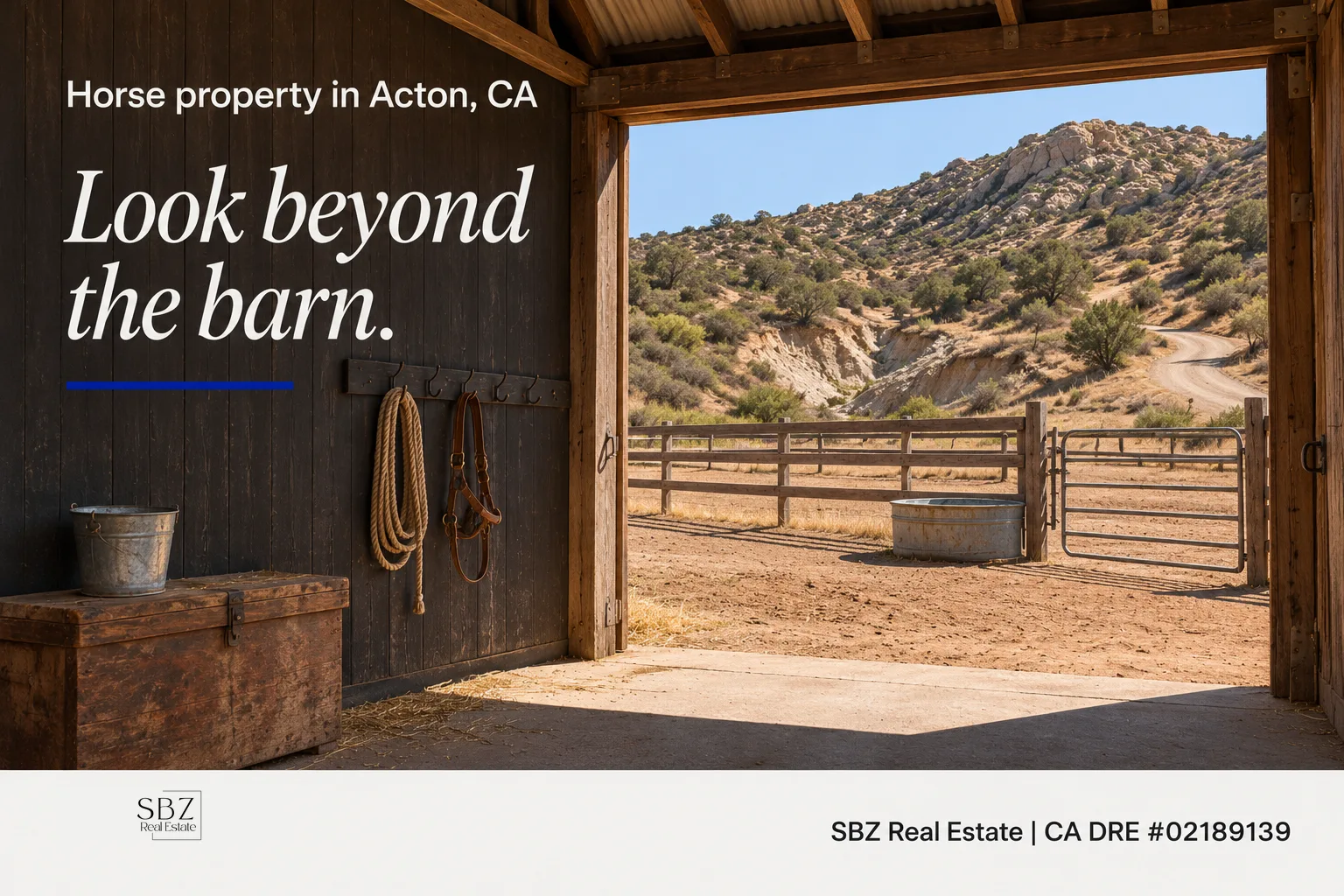
Horse property in Acton is rural acreage in unincorporated Los Angeles County, usually with space and zoning that allow horse keeping. What makes a given parcel work for horses comes down to the lot, the water, the fencing and structures, and the rules that apply to that specific address. Here is what actually matters in this market, and what I'd verify before you fall for a pretty barn.
What counts as horse property in Acton?
"Horse property" is a marketing phrase, not a legal category. In practice it means a parcel with enough usable land, appropriate zoning, and improvements such as a barn, stalls, corrals, or an arena. Some listings use the term loosely for any property with a few acres, so the label alone tells you very little.
Acton sits in the high desert foothills northeast of Santa Clarita, and its rural character is the draw. Lots tend to be larger than in nearby suburbs, and many are set up for animals. But two neighboring parcels can differ sharply in what they allow and what they need.
How do I confirm the zoning allows horses?
Start with the parcel's zoning designation, then confirm what it permits. Because Acton is unincorporated, the county's planning and zoning rules apply, not a city's. Horse keeping is often allowed on rural and agricultural zones, but the number of animals, setbacks for barns and corrals, and any permits can vary by zone and lot size.
Don't rely on the listing description. Ask your broker to pull the zoning and check it against the county's planning resources, and confirm directly with the county if you plan to keep multiple horses, board animals for others, or run any kind of business. Any restrictions recorded against the title, such as easements or private covenants, are separate from zoning. A title search will surface those.
What should I know about water and septic?
Many rural Acton properties are not on a municipal sewer system, and water may come from a private well or a local water source. Both deserve real diligence, because horses use a lot of water and the infrastructure is yours to maintain.
For a well, ask for any available records, and consider having the well tested for flow and water quality. For a septic system, a dedicated septic inspection is worth the cost, since a failing system can be a major expense. A general home inspection often does not go deep on these, and the same logic applies to older rural homes elsewhere in the high desert, as covered in our look at what inspections reveal in older Antelope Valley homes.
How does wildfire risk affect an Acton property?
This area includes land the state maps in fire hazard severity zones, so wildfire planning is part of owning here. It affects insurance availability and cost, defensible space requirements, and how you lay out barns, hay storage, and fencing.
Before you go far, get an insurance quote for the exact address. Ask about brush clearance expectations and whether the property has more than one way out for you and your animals, including a plan for evacuating horses. This isn't meant to scare you off. It's the kind of practical question that separates a well-planned purchase from a stressful one.
What do I check on the land itself?
Walk it with a critical eye, not just an admiring one. For horses, the land's usability matters more than its acreage.
- Usable acreage: Slope, washes, and rocky areas can shrink the flat, fenceable ground considerably.
- Drainage: Look at where water goes in a heavy rain. Standing water and erosion are hard on animals and structures.
- Boundaries: Rural parcels sometimes have fences that don't match the legal lines. A land survey can settle it before closing.
- Access: Confirm whether the road is publicly maintained or private, who pays for upkeep, and whether there's a recorded easement.
- Trails: If riding from your gate matters, verify trail access and any easements rather than assuming it comes with the property.
Are the barn, arena, and outbuildings permitted?
This is the thing many buyers miss. Rural properties often have structures added over the years, and not all were permitted. An unpermitted barn, guest unit, or covered arena can create problems at financing, insurance, or resale.
Ask for permit history and have the inspection cover every structure, not only the house. If something is unpermitted, your broker can help you weigh whether to negotiate, require the seller to resolve it, or walk away. Sellers on the other side of this have their own obligations too, outlined in our guide to seller disclosures in California.
How do taxes, financing, and the buying process differ?
Rural and acreage purchases can involve extra steps. Lenders may have specific requirements for properties with wells, septic, or significant land, and appraisals can be harder when there are few comparable sales. Talk with a lender early about how they treat acreage and outbuildings.
On taxes, a purchase generally triggers reassessment, and you may also see a supplemental bill. Our explanation of supplemental property taxes in California walks through how that works. Our buyer services page outlines how we guide a purchase from search to close.
How does Acton compare with nearby areas?
Acton offers space that's hard to find closer to the city, with a quieter, more rural rhythm. Some buyers look at it alongside the Antelope Valley, where Palmdale offers a different mix of lot sizes and conveniences, or Santa Clarita for a shorter route to services and the 14 freeway corridor. If you're coming from the city, our guide to moving from Los Angeles to the Antelope Valley covers the lifestyle adjustments that tend to surprise people.
Commute, distance to feed stores, vets, and farriers, and how you feel about rural living day to day are worth weighing as much as the property itself.
What's a sensible way to start?
Decide what you need before you tour: how many horses, whether you want an arena, how much usable land, and your comfort level with well and septic. Then have those requirements checked against zoning and the specific parcel, not a general impression of the area.
If you're weighing a move to horse country, a quick conversation costs nothing, and we're happy to talk through what to look for before you start touring.
Frequently asked questions
Is horse property in Acton, CA expensive?
Prices vary widely with acreage, improvements, and condition, so there's no single number worth quoting. A broker can pull current comparable sales for the type of property you want.
Do I need a special loan to buy horse property?
Not necessarily, but lenders may apply extra requirements to rural parcels with wells, septic, or substantial acreage. Speak with a lender early so there are no surprises at appraisal.
How many horses can I keep on an Acton property?
It depends on the zoning, the lot size, and county rules for that specific parcel. Confirm the limits with the county before you buy, not after.
Should I get a separate inspection for the well and septic?
Yes. A general home inspection typically doesn't evaluate these systems in depth, and repairs can be costly, so specialized inspections are a sound investment.
Does buying land in Acton raise my property taxes?
A purchase generally triggers reassessment at the new value, and a supplemental tax bill may follow. Ask your broker or a tax professional how it applies to your situation.