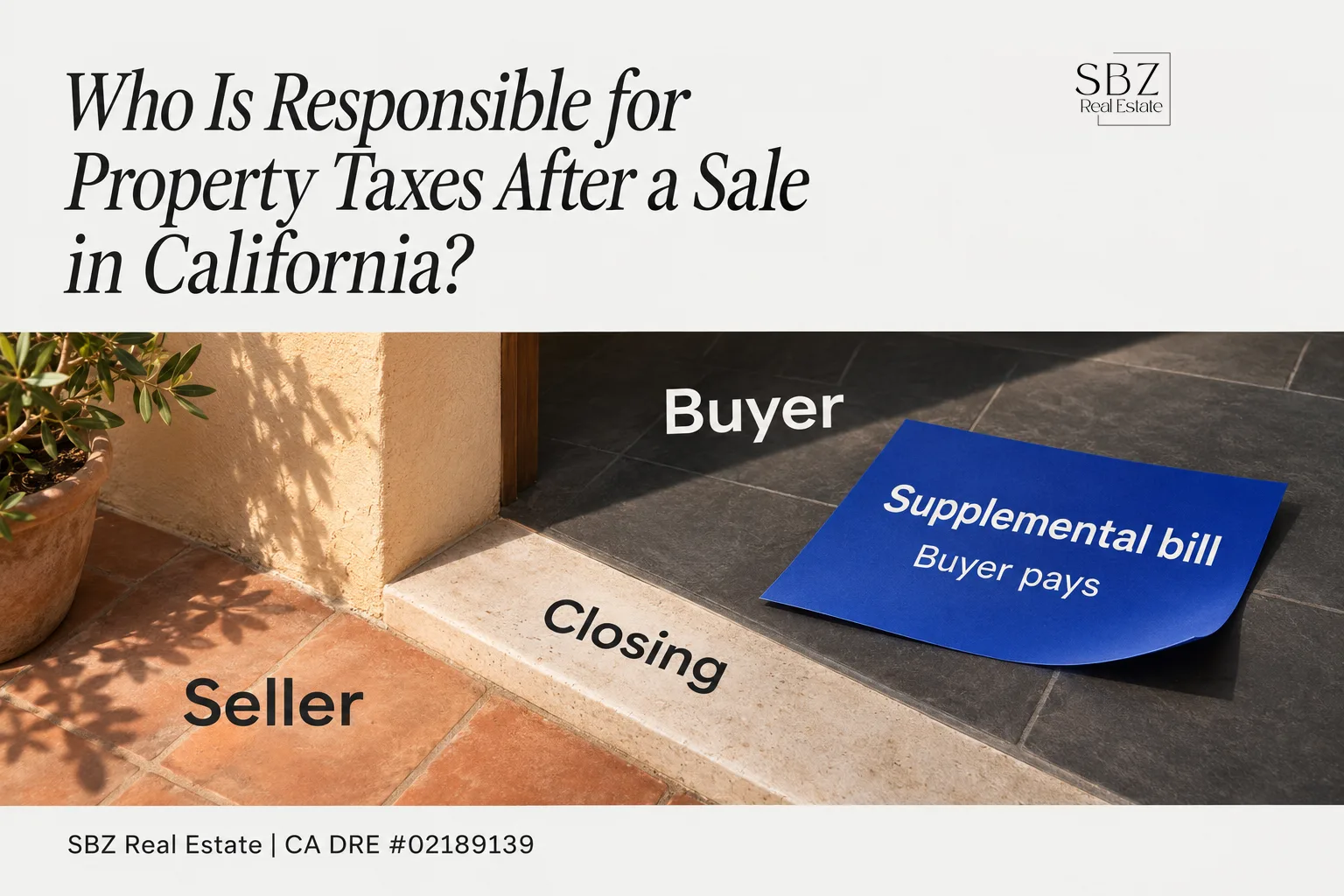
The seller is responsible for property taxes through the day the sale closes, and the buyer is responsible from that day forward. Escrow divides the current tax bill between the two at closing, so neither side pays for time they didn't own the home. The part that surprises most people is the supplemental tax bill, which arrives after closing and belongs to the buyer.
Here's how the handoff works in California, and what to watch for on each side of the table.
How does California property tax timing work?
California property taxes run on a fiscal year from July 1 to June 30. The county sends one bill for the year, payable in two installments: the first is due November 1 and becomes delinquent after December 10, and the second is due February 1 and becomes delinquent after April 10.
Because the bill covers a fixed fiscal year and not a calendar year, the amount owed by each party depends on when in that year the sale closes. A closing in October looks very different from one in April, which is why proration matters. The county assessor, tax collector and your local jurisdiction are the sources for your actual figures. Nothing in this article replaces your own tax bill.
How does escrow split property taxes between buyer and seller?
Escrow prorates the taxes on a per-day basis as of the closing date. The seller is charged for the days they owned the home in the current tax period, and the buyer is responsible for the rest.
In real terms, there are two common situations:
- The seller has already paid an installment that covers time after closing. The buyer reimburses the seller for those days, shown as a credit to the seller on the settlement statement.
- The seller hasn't paid yet. The seller is charged for their share of the days owned, and the buyer takes over the unpaid balance, shown as a credit to the buyer.
The escrow officer handles the math and shows it line by line. If you want to understand the neutral third party running this process, our guide to what escrow is and how it works in California walks through it, and real estate escrow services in California covers who pays for escrow itself.
What happens if the seller owes back taxes?
Any delinquent property taxes are a lien on the property, so they have to be resolved before the buyer takes clean title. Title work will surface them, and the unpaid amount is typically paid from the seller's proceeds at closing.
This is one reason sellers should review their seller net sheet early. Back taxes, if any, reduce what you walk away with, and it's much better to see that number at the start than at the signing table. For the full picture of seller-side expenses, see what closing costs home sellers pay in California and the cost of selling a house in California.
What is a supplemental property tax bill, and who pays it?
A supplemental tax bill is issued when a property changes ownership or has new construction completed. Under Proposition 13, a change in ownership generally triggers a reassessment of the property to its current market value as of the transfer date. The county then bills the difference between the old assessed value and the new one for the remainder of the fiscal year.
That bill is the new owner's responsibility. It is separate from the regular annual bill and usually arrives a few months after closing, sometimes as more than one bill depending on timing. Escrow doesn't collect it at closing, because the new assessed value isn't known yet.
Here's the thing most buyers miss: a supplemental bill is not a mistake or a penalty. It's how the county catches up to the new value. If you're buying, budget for it before you sign, and ask your lender or broker how it interacts with your payment. If you're selling, you generally aren't the one who receives it, though the two of you should confirm what your purchase agreement says.
Buyers weighing the long-term picture should also understand how the base is set and when it can move. Our guides on how to transfer your property tax base under Prop 19 and inheriting a house under Prop 19 cover the situations where the rules differ.
Does the buyer's lender collect property taxes?
Often, yes. Many lenders require an impound or escrow account, where a portion of each monthly mortgage payment goes toward taxes and insurance, and the lender pays the county when bills come due. At closing, the buyer usually funds an initial reserve into that account.
This is easy to confuse with the escrow that closes your sale, but they're different things. The closing escrow is temporary and ends when title transfers. The impound account lasts as long as the loan and is managed by the servicer.
If you're buying, whether taxes are impounded affects your monthly payment and what you'll owe in cash at closing. Closing costs for home buyers in the Antelope Valley outlines what typically shows up on the buyer's side. Your lender can tell you exactly how your loan is set up.
Do some Southern California homes carry extra tax charges?
Some do. Beyond the base property tax, certain properties carry voter-approved bonds, special assessments or Mello-Roos community facilities district charges that appear on the same tax bill. Those obligations stay with the property, so the buyer inherits them from closing forward, and they're prorated like the rest of the bill.
Whether a given home has one is a property-specific question answered by the tax bill and the title report, not by city name. For a plain-English look at one common example, see what Mello-Roos taxes are and whether Antelope Valley homes have them. If you're evaluating a specific area, our community pages for Palmdale, Lancaster and Santa Clarita are a good starting point for local context.
What should buyers and sellers do before closing?
A few habits prevent nearly every property tax surprise:
- Read the preliminary title report and check for delinquent taxes, special assessments or liens.
- Pull the current tax bill and look at both installments, whether each has been paid, and any line items beyond the base tax.
- Review the proration on the estimated settlement statement before closing day, not during it.
- Buyers: plan for the supplemental bill. Set the money aside so it doesn't land as a surprise.
- Sellers: confirm nothing is outstanding. Unpaid installments reduce your proceeds.
If your situation involves an inheritance, a trust transfer, a rental property or a 1031 exchange, tax treatment can vary, and a CPA or tax attorney is the right person for the specifics.
Have questions about your own closing?
Property tax proration is one of those details that's simple once someone walks you through your specific numbers. If you're buying or selling and want to see how it plays out on your own settlement statement, get in touch. A quick conversation costs nothing.
Related reading
- What Are Supplemental Property Taxes in California? A Broker Explains
- What Is a Property Tax Lien Sale? How It Works in California
- What Do Property Taxes Pay for in California?
Frequently asked questions
Who pays property taxes the day a house closes?
Escrow prorates by day, so the seller covers the days through closing and the buyer covers the days after. The settlement statement shows each side's share.
Does the seller pay the supplemental tax bill?
Generally no. The supplemental bill reflects the reassessment triggered by the new owner's purchase, so it is the buyer's responsibility, though your purchase agreement and escrow instructions are what control your specific deal.
What if the seller hasn't paid their property taxes?
Unpaid taxes are a lien on the property and have to be cleared for the buyer to receive clean title. They are typically paid out of the seller's proceeds at closing.
Will my property taxes go up after I buy a home in California?
Often they do, because a change in ownership generally resets the assessed value to the current market value. Exceptions exist, such as certain transfers covered by Prop 19, so check your situation with the county assessor.
Is the lender's impound account the same as escrow?
No. Closing escrow is a temporary account that ends when the sale closes. An impound account is set up by the lender and continues for the life of the loan to pay taxes and insurance.
I got a property tax bill after I sold my house. Do I have to pay it?
Usually not, but check before you ignore it. Annual bills go to whoever owned the home on January 1, so sellers often receive the next bill after closing even though escrow already split the taxes. Compare the bill with your closing statement, then call your escrow company or the county tax collector. If the bill covers time when you owned the home, such as a supplemental or escape assessment from before the sale, it may be yours.