
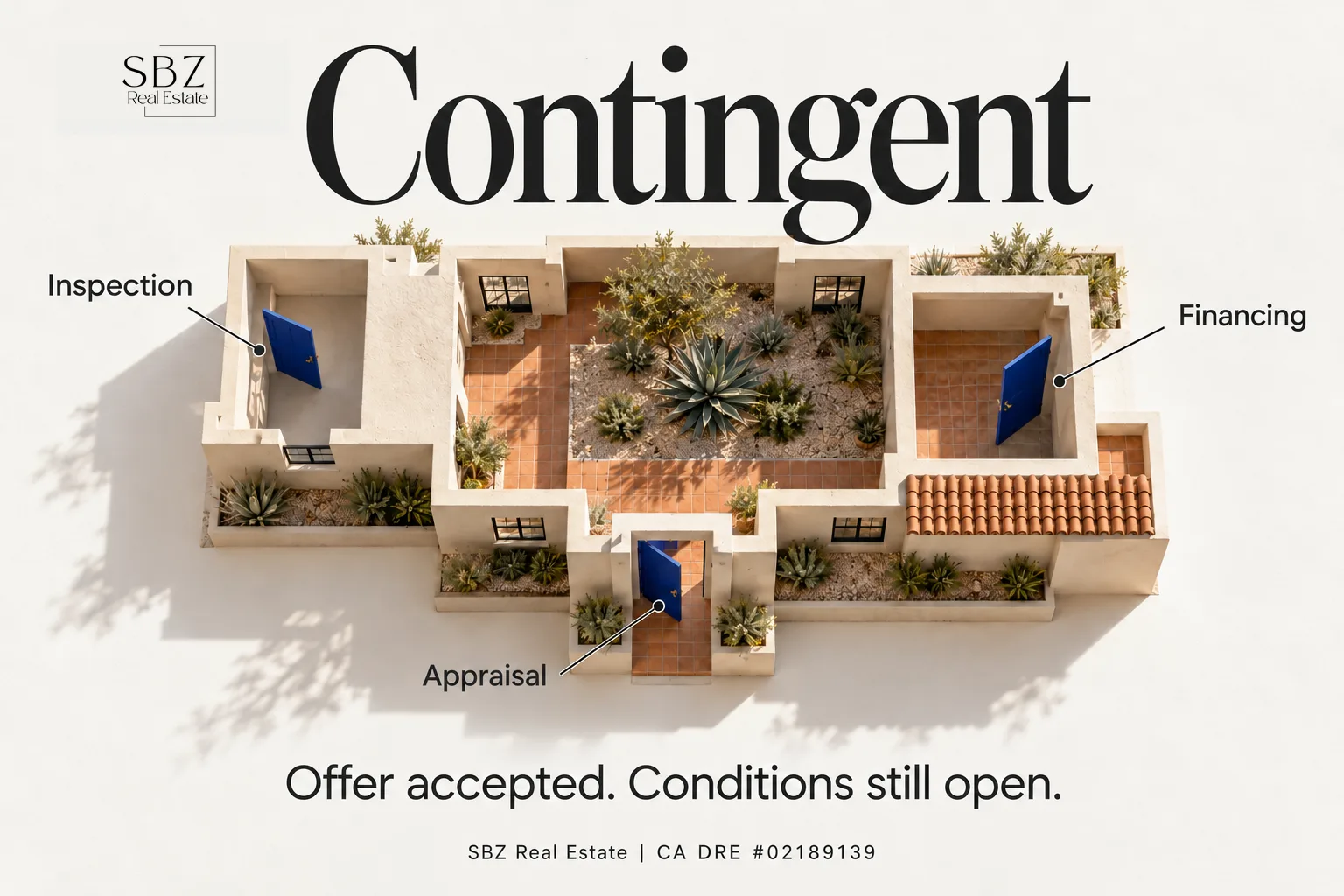
A contingent home sale means the seller has accepted an offer, but the sale can't close until certain conditions are met. If a listing says "contingent," the home is spoken for on paper, and the deal can still change. Here's what actually matters whether you're the buyer hoping to make an offer or the seller deciding how to respond to one.
What does contingent mean on a home for sale?
When a home is listed as contingent, the seller and a buyer have agreed on terms, and the purchase agreement includes one or more contingencies. A contingency is a condition written into the contract. If it isn't satisfied, the buyer (or sometimes the seller) can step away, usually with their deposit protected.
Think of it as a "yes, if." The seller said yes to the offer, if the inspection goes well, if the appraisal supports the price, if the loan is approved. Once those conditions are cleared or removed in writing, the sale moves toward closing. If you want the broader vocabulary, our guide to contingent, short sale, and other listing terms covers the rest of the listing jargon.
What are the most common contingencies in California?
Most California purchase agreements carry some combination of these:
- Inspection contingency. The buyer can investigate the property's condition and negotiate repairs or credits, or cancel. Our breakdown of what a California home inspection covers explains how buyers and sellers use the report.
- Appraisal contingency. The home has to appraise at or near the agreed price, or the buyer can renegotiate or walk.
- Loan contingency. The buyer's financing has to be approved. A buyer paying cash won't have this one.
- Title and disclosure review. The buyer has time to review the preliminary title report and the seller's disclosures.
- Sale of the buyer's current home. The buyer's purchase depends on selling the property they already own.
The standard California residential purchase agreement sets default time frames for removing these, and the parties can negotiate shorter or longer ones. Each contingency is removed on its own timeline, so a listing can carry several open conditions at once.
What is a sale-of-home contingency?
This is the one most people mean when they search "contingent on sale of home." The buyer needs the proceeds from their current house to buy the next one, so their offer is conditional on that sale closing.
For the buyer, it's a way to avoid owning two homes at once. For the seller, it adds a chain of uncertainty: your sale now depends on a second transaction you don't control. If the buyer's home sits on the market, doesn't appraise, or its own buyer backs out, your deal can stall.
That's why sellers often respond to these offers carefully. Common protections include:
- A kick-out clause. The seller keeps marketing the home. If a stronger offer arrives, the first buyer gets a short window, often around 72 hours, to remove the sale contingency or release the property.
- A firm timeline. The buyer's home has to be listed, priced, and under contract within agreed dates.
- Proof the buyer's home is actively marketed. Your broker can review the buyer's listing and the progress of their sale.
Terms vary by deal, and none of these are automatic. They're negotiated, and a broker who has seen these chains succeed and fail will help you judge how realistic the buyer's plan is.
What's the difference between contingent and pending?
It depends on where you're looking, which is the part that confuses people. Many listing sites use "contingent" for a home under contract where conditions are still open, and "pending" once contingencies have been removed and the sale is moving toward closing. Others use their own labels, such as "active under contract."
In practice, the status is a clue, not a verdict. Two homes both marked contingent can be in very different places: one with a single open inspection window, another waiting on a buyer to sell their house. Ask the listing broker which contingencies are still open. A good one will usually tell you plainly.
Can you still make an offer on a contingent home?
Often, yes. If you're a buyer, you can submit a backup offer, which is positioned behind the accepted offer and activates only if that deal falls apart. It costs you nothing but patience, and it can pay off when a home you love has open contingencies.
If the home has a kick-out clause, a clean offer with fewer conditions may also prompt the first buyer's clock to start. Either way, go in with realistic expectations: sometimes contingent deals close as planned, and sometimes they don't. If you're preparing to buy, our buyer services page shows how we guide that process, and a look at how much to put down helps you decide how strong your offer can be.
What should sellers think about before accepting a contingent offer?
Here's the thing most sellers miss: the highest number isn't always the strongest offer. An offer with a sale-of-home contingency may carry more risk than a slightly different offer with fewer conditions. Weigh these points:
- How firm is the buyer's financing? Pre-approval, down payment source, and any other conditions all matter.
- How realistic is the buyer's own sale? Ask what condition and price their home is in.
- What's your own timeline? If you're buying your next home, a delay can ripple into your plans.
- What protections can you build in? Kick-out clauses, shorter removal periods, and deposit terms all shape your risk.
Pricing influences all of this. A home priced in line with the market tends to draw cleaner offers, so it helps to understand how to price your home to sell in Los Angeles before you list. And if timing is a worry, it's worth reading how long it takes to sell a home in Southern California so your expectations match how these transactions typically unfold. Our seller services page explains how we handle offers and negotiations.
How does escrow fit in?
Once an offer is accepted, escrow opens and the contingency periods run inside it. Escrow is where deposits are held, documents are collected, and each contingency is formally removed. If you're newer to the process, here's how escrow works in California. Whether you're buying in the Antelope Valley or selling elsewhere in Southern California, the contingency steps work the same way. Only the local market conditions change.
Frequently asked questions
What does contingent mean on a home for sale?
It means the seller accepted an offer, but the sale depends on conditions in the contract, such as inspection, appraisal, financing, or the buyer selling their own home. The home isn't officially sold until those conditions are cleared and the sale closes.
Is a contingent home still available to buy?
In many cases you can submit a backup offer, which takes effect only if the first deal falls through. The listing broker can tell you whether backup offers are being accepted.
Can a seller back out of a contingent sale?
Generally, a seller who has signed a purchase agreement is bound by it, so backing out without a contractual reason can carry consequences. The contract may allow the seller to cancel in specific circumstances, such as a kick-out clause, so review the terms with your broker.
Is contingent the same as pending?
Not always. Many listing sites use "contingent" while conditions remain open and "pending" once they're removed, but labels vary, so ask which contingencies are still active.
Should I accept an offer that is contingent on the sale of the buyer's home?
It depends on how strong the buyer's plan is and what protections you can add, such as a kick-out clause or firm deadlines. A broker can help you compare it with other offers.
If you're weighing a move, a quick conversation costs nothing. You can reach us through the contact page, and we'll talk through how contingencies could affect your plans.