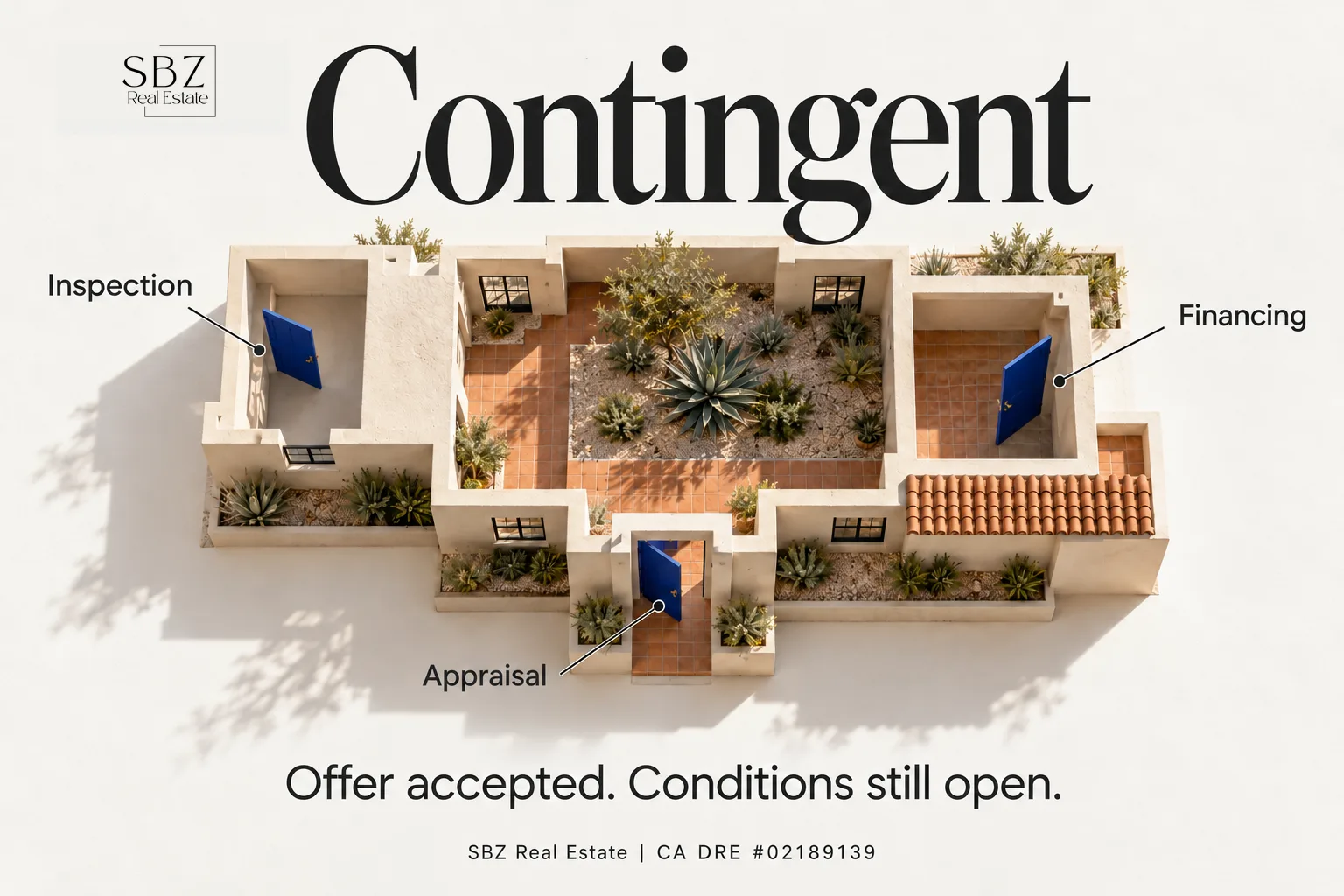
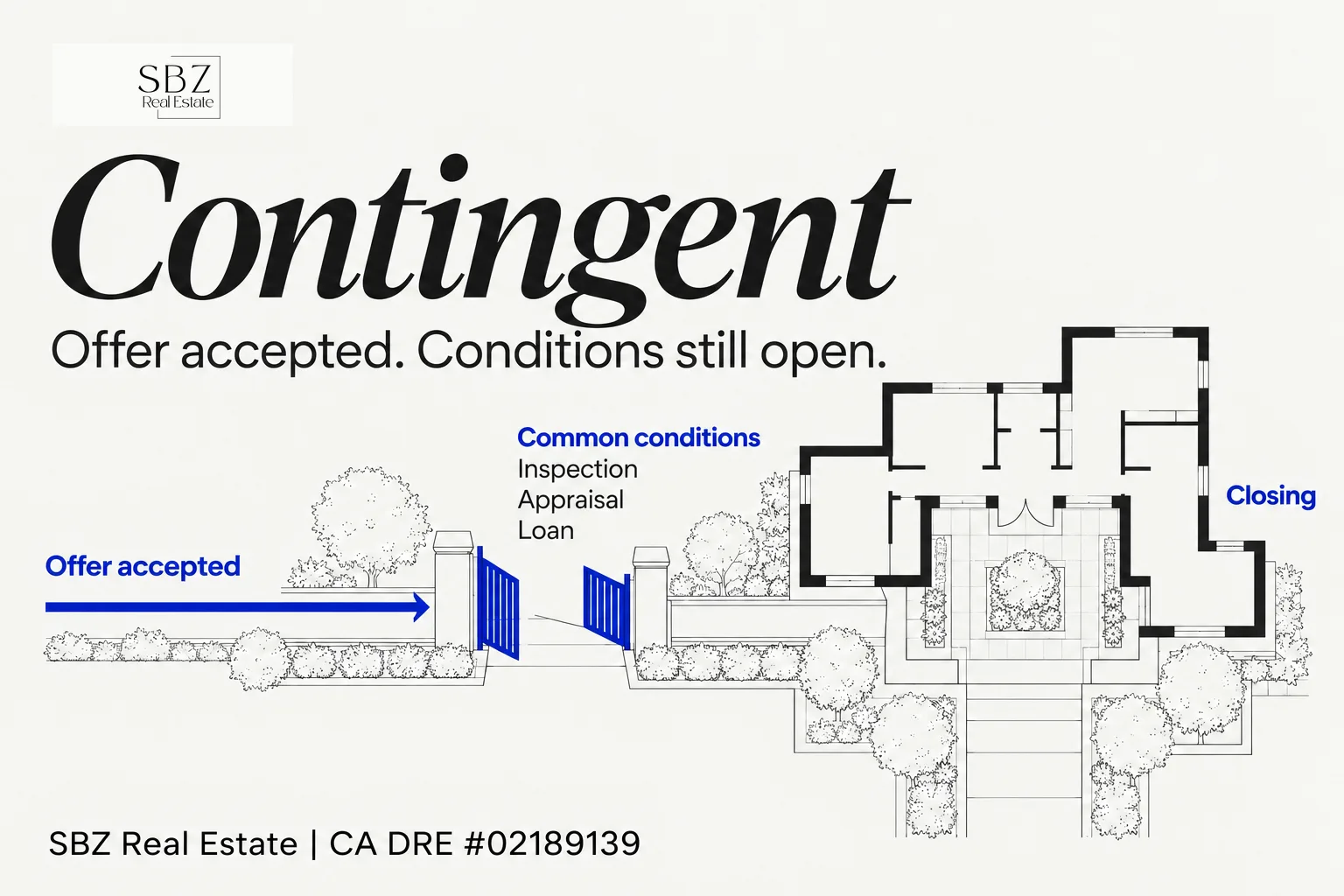
A contingent house sale means the seller has accepted an offer, but the deal depends on one or more conditions being met before it can close. If a condition isn't met, the buyer can usually cancel without losing their deposit. That is why "contingent" is not the same as "sold."
The word shows up on listings all the time, and it confuses buyers and sellers alike. Here is what it means in practice, which contingencies matter most, and how to handle a contingent listing from either side of the table.
What does "contingent" mean in a house sale?
A contingency is a condition written into the purchase contract. The buyer's obligation to complete the purchase depends on that condition being satisfied or formally removed. Until then, the sale isn't final.
Think of a contingent listing as a deal in progress. The seller and buyer have agreed on terms, and both are now working through the items that have to clear first. Most contingent sales do move forward to closing. But the status tells you there is still work between acceptance and the keys changing hands.
If you want a broader look at listing terms, our guide to real estate terms like contingent and short sale covers how the labels differ.
What are the most common contingencies?
In California, a buyer's offer typically includes several standard contingencies. Each one protects the buyer in a specific way:
- Inspection (investigation) contingency. The buyer can have the property inspected and decide whether to proceed, negotiate repairs, or cancel. Our guide to what a California home inspection covers explains how buyers use the report.
- Appraisal contingency. If the lender's appraisal comes in below the agreed price, the buyer has options: renegotiate, bring more cash, or step away.
- Loan contingency. The buyer's purchase depends on final loan approval. If financing falls through within the contract's timeframe, the buyer can cancel.
- Title and disclosure review. The buyer reviews the preliminary title report and the seller's disclosures, and can object to anything unacceptable.
- Sale-of-buyer's-home contingency. The purchase depends on the buyer selling their current home first. This is the one most people mean when they search "contingent sale of house."
The first four are routine. The last is less common and changes the dynamics of the deal considerably.
What is a home sale contingency, specifically?
A home sale contingency (sometimes called a "contingent sale of house") means the buyer can only complete the purchase if their own home sells and closes. It usually appears as an addendum to the purchase agreement, with its own deadlines and conditions.
It is often used by buyers who need the equity from their current home for the down payment. If you're working out how much you actually need, our guide on how much to put down on a house is a good starting point.
For sellers, this type of contingency carries more uncertainty. The deal now depends on a second transaction the seller doesn't control: the buyer's own sale, which has its own buyer, inspections, and financing.
How does a contingent listing differ from "pending"?
The terms are often used loosely, and listing services label them differently, but the general pattern is this. "Contingent" usually signals that at least one meaningful condition is still open. "Pending" usually signals that the contingencies have been removed or satisfied and the transaction is moving toward closing.
Because labels vary from one listing platform to another, don't rely on the status alone. If a particular home matters to you, ask your broker what kind of contingency is actually in play. A home that's contingent only on a routine inspection is a very different situation from one that's contingent on the buyer selling another property.
What does a contingent listing mean if you're a buyer?
If you love a home marked contingent, you may still have a path to it. Here's what we'd look at:
- Find out which contingency is open. A routine inspection period is short and often resolves quickly. A home sale contingency can take much longer.
- Ask whether the seller can keep marketing the home. Many contingent-sale arrangements allow the seller to continue showing the property and accept backup offers.
- Consider a backup offer. If the first deal falls through, a backup buyer is first in line. It costs nothing to ask your broker whether this makes sense.
- Be realistic about timing. If you need to move on a deadline, a contingent listing may not fit, and that's worth knowing early.
If you're early in the process, our buying a home page walks through how we guide buyers from search to closing.
What does a contingent sale mean if you're a seller?
For sellers, contingencies are a normal part of the contract, but each one is a point where a deal can change. The key is understanding what you've agreed to and how much flexibility you have.
Here's what we encourage sellers to think through:
- Know every deadline. Each contingency has a timeframe in the contract. Track when each one is due to be removed.
- Weigh the buyer's strength, not just the price. An offer with fewer contingencies, or a buyer with firm financing, can be a stronger deal than a higher number with several open conditions. That's a trade-off to weigh, not a rule.
- Understand any "right to continue marketing" terms. With a home sale contingency, sellers can often negotiate the right to keep showing the home and to give the buyer a limited window to remove the contingency if a better offer arrives.
- Price to attract clean offers. A well-positioned home tends to draw stronger, simpler offers. See how we think about pricing your home to sell in Los Angeles.
If you're getting ready to list, our selling your home page explains what working with us looks like.
What happens when contingencies are removed?
As each condition is satisfied, the buyer signs a document removing that contingency. Once all of them are removed, the buyer is generally committed. Backing out after that point can put the buyer's deposit at risk.
The transaction then moves through escrow, where the funds, title work, and closing documents come together. How long that takes depends on the contract terms and the specifics of each deal. Our guide to how long it takes to sell a home in Southern California covers what shapes the timeline.
Can a contingent sale fall through?
Yes. That's the whole point of a contingency. Common reasons include a disappointing inspection, an appraisal gap, a loan that doesn't get final approval, or a buyer's own home not selling in time.
It's not a reason to panic, whichever side you're on. It's a reason to work with a broker who reads the contract closely and keeps you informed at every deadline. That's exactly what a boutique brokerage is for.
Frequently asked questions
What does contingent mean on a house for sale?
It means the seller has accepted an offer, but the sale depends on specific conditions being met, such as inspection, appraisal, loan approval, or the buyer selling another home. The deal isn't final until those conditions are cleared.
Can I still make an offer on a contingent house?
Often, yes. Depending on the contract terms, the seller may be able to accept backup offers or continue marketing the property. Ask your broker to check what the existing contingency allows.
Is contingent the same as pending?
Not exactly. Contingent generally means conditions remain open, while pending generally means they've been removed and the sale is moving toward closing. Labels vary by listing platform, so confirm the details rather than relying on the status.
What is a home sale contingency?
It's a condition that makes the buyer's purchase depend on the sale of their current home. It's usually added as an addendum with its own deadlines, and it adds uncertainty for the seller because the deal relies on a second transaction.
Can a buyer back out of a contingent sale?
A buyer can typically cancel for reasons covered by an open contingency, within the contract's deadlines. Once contingencies are removed, canceling can put the buyer's deposit at risk.
Questions about a contingent offer?
Whether you're considering a home that's already under contract or weighing an offer on your own, the details of each contingency are what matter. If you'd like a second set of eyes on the terms, a quick conversation costs nothing. You can reach out here and we'll take it from there.