The right agent is someone who knows your specific market — not just "Los Angeles" in the abstract, but your neighborhood, your price range, and the particular dynamics of a deal at this moment in this region.
Southern California real estate is not a single market. It's dozens of overlapping ones — the San Fernando Valley moves differently than the South Bay; Antelope Valley has its own pace and buyer pool; even two zip codes within the same city can produce completely different outcomes on price, days on market, and negotiating room. That's why choosing an agent is less about finding the most prominent name and more about finding the right fit for what you're actually trying to do.
Here's what I tell everyone who asks me this question: focus on competence, communication, and local knowledge. Everything else is noise.
What does "local expertise" actually mean?
It means the agent can tell you — without looking it up — what homes in your target area have been doing recently. Not the county average. Not a statewide trend. Your area.
A genuinely local agent can speak to micro-market conditions: which neighborhoods have seen longer days on market, what buyers in that price range are asking for, whether bidding wars are common or rare right now, and what recent comps actually suggest about where to price a listing or what to offer on a purchase.
Ask any agent you're interviewing: "What have you closed in this area in the last six months?" If they can't give you a specific, confident answer, that tells you something.
Should I hire a high-volume agent or someone more boutique?
Volume isn't the same as quality, and a large transaction count doesn't guarantee the broker is the person who will actually handle your deal.
Some high-producing agents run teams where your file gets handed to an assistant or a junior agent once you sign. There's nothing inherently wrong with a team model — but you should know going in whether the agent you interviewed is the agent who will negotiate your offer, attend your inspection, and take your calls at 7 p.m. the night before closing.
Ask directly: "If I hire you, who handles my transaction day-to-day?"
In a boutique practice, the broker you hire is often the broker doing the work. That matters especially in complex deals — short sales, probate sales, properties with disclosed issues, or transactions where timing is critical.
What questions should I ask before hiring a real estate agent?
A good initial conversation gives you real information, not a pitch. Here's what's worth asking:
- What is your experience in this specific market? (city, neighborhood, price range)
- How many transactions have you closed in the last 12 months? (Context: fewer isn't automatically bad — an agent who handles 10 deals carefully often outperforms one juggling 40)
- How do you communicate — calls, texts, email — and how quickly do you respond?
- How will you price my home / how do you help me evaluate a listing price? (A good answer involves comps and market context, not just flattery)
- Do you represent both buyer and seller in the same transaction? (Dual agency is legal in California but worth understanding — see below)
- What is your commission structure, and what does it cover?
You're not looking for perfect answers. You're looking for someone who responds with substance rather than sales language.
What is dual agency, and should I be concerned about it?
Dual agency means one agent (or brokerage) represents both the buyer and the seller in the same transaction. California law requires written disclosure and consent from both parties when this happens.
The practical implication: an agent in a dual-agency situation has a relationship with both sides and cannot fully advocate for either. That's not necessarily disqualifying — sometimes a transaction comes together naturally that way — but you should understand what you're consenting to before you sign.
If you want someone fully in your corner, an agent who represents only your side of the transaction is the cleaner arrangement.
How do I verify a real estate agent's license?
The California Department of Real Estate maintains a public license lookup at the DRE website (dre.ca.gov). You can search by name or license number. Any agent you work with should hold a current, active California real estate license. A broker's license reflects additional education and experience requirements beyond the salesperson level.
This is a basic step that takes two minutes and is worth doing.
Does it matter if an agent has special designations or awards?
Certifications like ABR (Accredited Buyer's Representative) or SRES (Seniors Real Estate Specialist) reflect specific training and can be relevant depending on your situation. They're a signal, not a guarantee.
Industry awards — "top producer," "five-star agent," various plaques — are more variable. Some reflect genuine peer recognition; others are marketing programs. Weight them accordingly. What I'd weight more heavily: concrete transaction history in your area, client references you can actually speak with, and how the agent communicates with you from the first conversation.
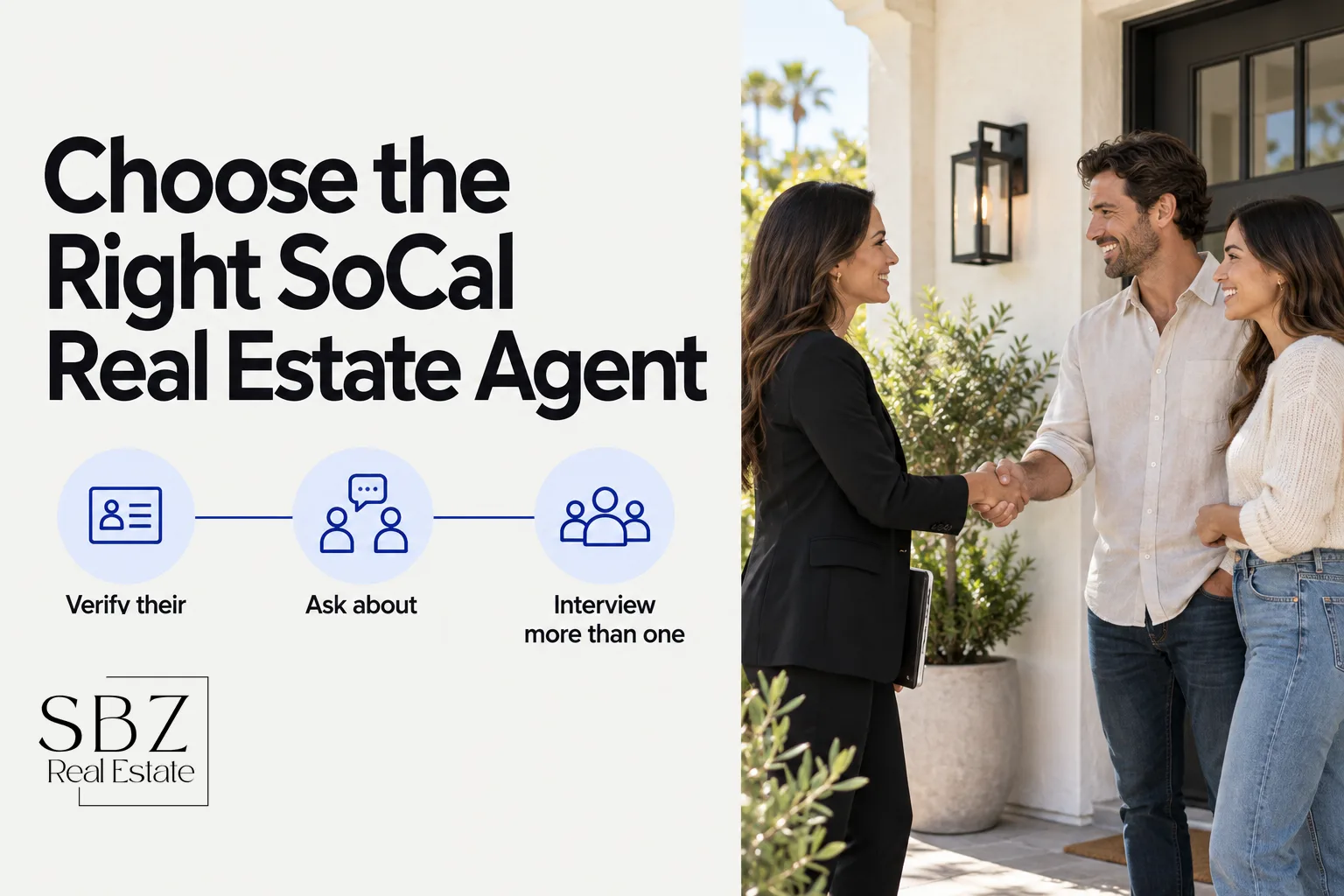
Should I interview more than one agent?
Yes. Even if the first person feels right, a second conversation gives you a baseline.
You don't need to interview five agents. Two or three is usually enough to get a sense of range — who knows the market, who communicates clearly, who is being straight with you about what your home might sell for or what a realistic offer looks like.
The thing most sellers miss: they fall for the agent who quotes the highest price. A high list price isn't a promise — it's a number. The market decides what a home is worth, and an agent who prices realistically, with a clear explanation of how they got there, is more useful to you than one who tells you what you want to hear.
What's a sign that an agent might not be the right fit?
A few things worth paying attention to:
- Pressure to sign quickly without answering your questions
- Vague or evasive responses to direct questions about their experience
- An inability to explain their pricing methodology with specifics
- Communication that's slow or inconsistent from the first interaction
- Overconfident promises about price or timeline without backing them up
A good agent is confident and direct — but also honest about what they don't know and realistic about what the market will and won't do.
The bottom line
Choosing a real estate agent in Southern California comes down to three things: they know your specific market, they communicate clearly and promptly, and they'll be the one actually doing the work on your deal.
The relationship matters as much as the résumé. You're going to be in contact with this person through one of the larger financial transactions of your life. How they show up in the first conversation is usually how they show up when things get complicated.
If you're weighing a move — buying, selling, or still figuring out which direction makes sense — a conversation costs nothing. I'm happy to talk through where you are and what your options look like, without any pressure to take the next step before you're ready.
Related reading
- What Is Escrow and How Does It Work in California?
- How Long Does It Take to Sell a Home in Southern California?