
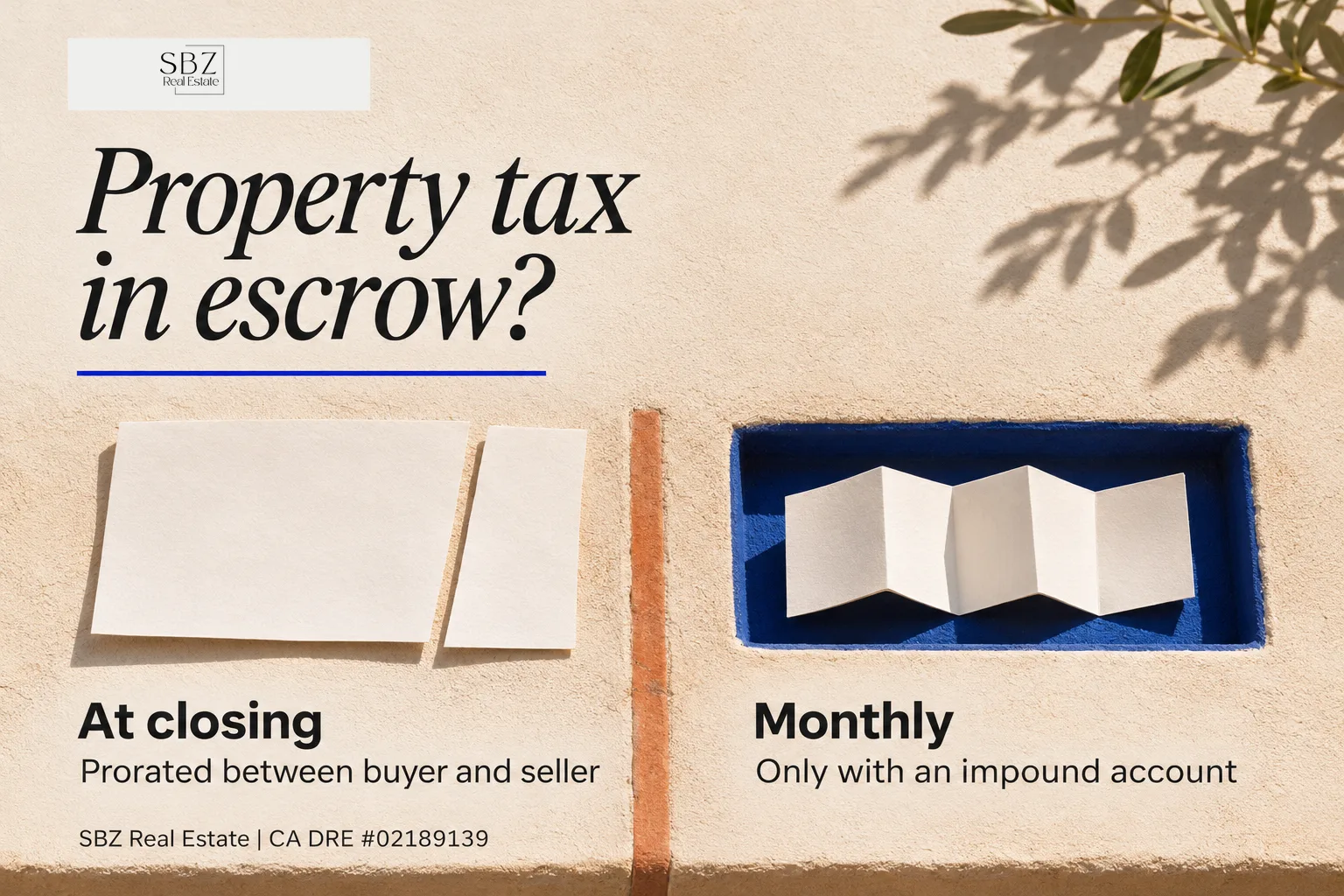
Sometimes. Property tax is included in escrow if your lender collects it monthly through an impound account, and it also shows up as a prorated line item when a sale closes. If neither applies, you pay the county directly.
"Escrow" means two different things in real estate, and that is where most of the confusion comes from. Below, I'll separate the two so you know exactly where your property tax money goes.
What are the two meanings of "escrow"?
The first is the escrow of a sale: a neutral third party holds the money and documents while a purchase closes. The second is a mortgage escrow account, also called an impound account, which your lender sets up to collect taxes and insurance along with your monthly payment.
Property tax touches both. In a sale, it is divided between buyer and seller. After closing, it may be paid for you from your impound account. If you want the sale-side basics first, here is what escrow is and how it works in California.
How is property tax handled when a sale closes?
During the sale, the escrow officer prorates property tax so each side pays for the days they owned the home. California's tax year runs July 1 through June 30, and the tax bill is paid in two installments.
In real terms, this is how it plays out:
- If the seller has already paid an installment covering days after closing, the buyer reimburses the seller for those days through escrow.
- If taxes for the seller's ownership period are unpaid, the seller is charged and the amount is paid from their proceeds.
- The proration appears on the settlement statement for both sides.
This is one reason property tax belongs on a seller net sheet and in a buyer's cash-to-close estimate. For the question of who owes what after the deed records, see who is responsible for property taxes after a sale in California.
Does my monthly mortgage payment include property tax?
It may. If your lender requires or you choose an impound account, your payment has several parts: principal, interest, and a monthly portion of your estimated property tax and homeowners insurance. The lender holds those funds and pays the county when installments come due.
Whether you have one depends on your loan. Government-backed loans such as FHA and VA commonly require impounds, and many conventional lenders require them at higher loan-to-value ratios or offer them as a choice, sometimes with a fee or slightly different pricing when you decline. California also has its own rules on when a lender may require one on an owner-occupied home, so ask your lender to put the requirement in writing instead of assuming.
If you have no impound account, your payment is just principal and interest. You then owe the county directly, and nobody reminds you.
When are California property taxes actually due?
Secured property taxes are billed in two installments:
- First installment: due November 1, delinquent after December 10.
- Second installment: due February 1, delinquent after April 10.
Miss those and penalties apply. Leave a bill unpaid long enough and the county can move toward a tax-defaulted status, which can end with a sale. If you are curious how that works, read about property tax lien sales in California.
With an impound account, your servicer pays on time. Without one, the due dates are yours to track.
How much will my property tax be, and what is the escrow shortfall?
California's base rate under Prop 13 is generally 1% of assessed value, plus any voter-approved local charges, though your bill depends on your specific parcel. A purchase typically resets the assessed value to the purchase price, so the seller's old bill is usually a poor predictor of yours.
That reassessment can also trigger a supplemental bill after closing. Supplemental bills are often not covered by your regular impound payment, so budget for them separately. Our guide to supplemental property taxes in California explains when they arrive and how they're calculated.
Impound accounts are re-analyzed each year. If your assessed value rose or the bill came in higher than estimated, the servicer may report a shortage and raise your monthly payment, or ask for a lump sum to catch up. It is not a mistake, just the account correcting to the real bill.
Should I pay property tax through escrow or on my own?
Here is what I tell buyers: it depends on your habits and your cash flow, and you may not have a choice.
Impounds make sense if you like a predictable monthly number and don't want to save up for two large installments. They also protect you from missed deadlines.
Paying directly makes sense if you are disciplined about setting money aside and want to keep that cash working for you in the meantime. Just be honest with yourself about whether you will actually do it.
Either way, understand what the tax is funding. What property taxes pay for in California breaks down where the money goes, and the $7,000 homeowners' exemption can lower your bill if you qualify and file for it.
What other costs show up at closing?
Property tax is only one part of the closing picture. Buyers also see title, escrow, and lender charges, plus prepaid items that fund the start of an impound account. For a local breakdown, see closing costs for home buyers in the Antelope Valley. Our buying a home page also outlines how we walk clients through the numbers before they write an offer.
If you are unsure how title and escrow differ, this explainer on title and escrow companies clears it up.
If you are weighing a move anywhere from Palmdale to the San Fernando Valley, a quick conversation about what your tax and escrow picture will look like costs nothing. You can reach us through our contact page.
Related reading
Frequently asked questions
Is property tax always included in an escrow account?
No. It is included only if your lender collects it through an impound account. Some loans require one, and others leave the payment to you.
Does escrow pay property tax at closing?
The escrow officer prorates the current tax year between buyer and seller and shows the adjustment on the settlement statement. Any unpaid taxes owed for the seller's period are paid from the seller's proceeds.
Can I cancel my impound account?
Sometimes, depending on your loan type, equity, and lender policy. Government-backed loans generally don't allow it, and conventional lenders may require a request in writing and conditions such as on-time payment history.
Why did my escrow payment go up?
Usually because your property tax or insurance bill increased, or the account had a shortage from the prior year. Your servicer's annual escrow analysis explains the change line by line.
Are supplemental taxes paid through escrow?
Often not. A supplemental bill after a purchase is typically sent separately, so plan to handle it directly unless your servicer confirms otherwise.