Mobile home escrow services do what any escrow does: a neutral third party holds funds and documents until every condition of the sale is met. What changes is the paperwork, because a mobile or manufactured home may be titled and transferred differently from a house on its own lot. Knowing which category your home falls into tells you who handles the closing and which steps to expect.
If you want the general picture first, our guide to what escrow is and how it works in California covers the basics. This article covers what's specific to mobile and manufactured homes.
What makes mobile home escrow different from a regular home sale?
The main difference is how the home is classified. A manufactured home can be treated as personal property, as real property, or as a home sitting on land the owner doesn't own. Each classification changes the transfer paperwork.
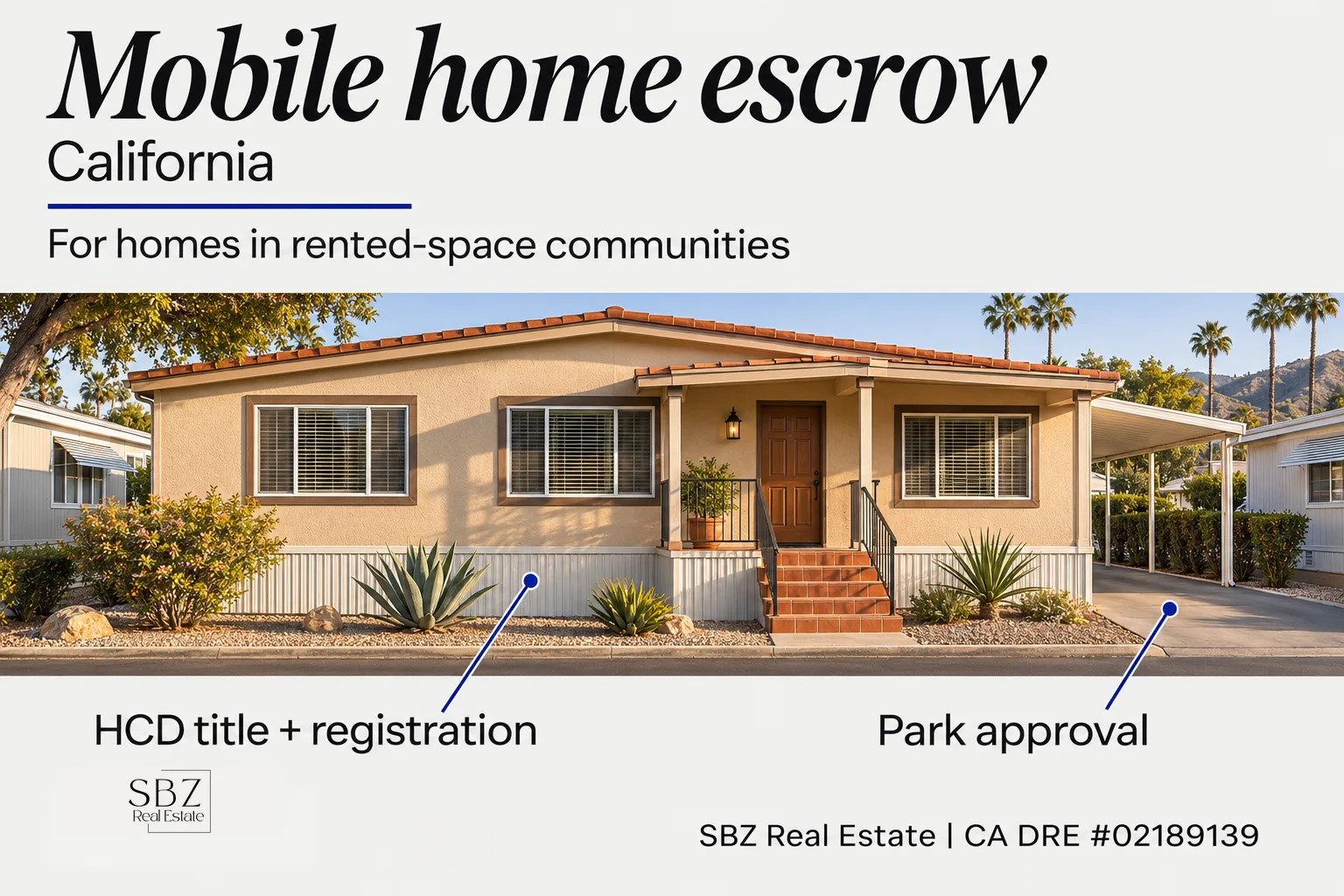
A home in a rented-space community is commonly registered and titled through the California Department of Housing and Community Development (HCD), not recorded at the county the way a house deed is. A manufactured home on land the owner holds, permanently affixed to a foundation, may instead be handled as real property with a recorded deed. Many homes fall somewhere in between, which is why you should confirm the classification before the sale goes any further. Your escrow holder or a title professional can check this.
Who can handle a mobile home escrow?
In California, escrow is typically handled by a licensed independent escrow company, a title company's escrow division, or in some cases an attorney. For mobile homes, the better question is whether your escrow officer has actually closed manufactured-home transactions. Ask directly how many they've handled and how they process HCD transfers.
Our article on real estate escrow services in California explains how to vet an escrow company and who normally pays the fee. Those points apply here as well. Some dealers also offer to coordinate the paperwork, so if you're buying through one, our guide to mobile home dealers in California covers how to vet them.
What does the escrow holder actually do on a mobile home sale?
The steps vary with the home's classification, but a typical mobile home escrow includes:
- Opening escrow and collecting the buyer's deposit
- Ordering a title or ownership search to confirm the seller can transfer the home and check for liens
- Confirming the home's registration status and any back fees owed
- Preparing and collecting the transfer documents for HCD, or a deed if the home is treated as real property
- Coordinating payoff of any existing loan or lien
- Handling prorations, such as rent in a community or property taxes
- Disbursing funds and confirming the transfer is complete
Some items on this list, such as lien releases and registration clearances, can take real time to resolve. That is the main reason to open escrow early and ask your escrow officer about timing at the start.
Does the park have to approve the buyer?
If the home sits in a rented-space community, usually yes. Park management commonly has a screening process for incoming owners, and California's Mobilehome Residency Law sets rules for how that screening works. The park can generally look at a buyer's ability to pay rent and meet community rules, but it is not free to reject someone arbitrarily.
Make approval a clear part of your contract timeline. A buyer who has funds ready but hasn't been screened can't close, and a seller who assumes approval is automatic can lose weeks. If you're selling, ask the park about its process before you list.
What about financing and property taxes?
Financing for manufactured homes depends on classification as well. Homes treated as real property on owned land can often use conventional or government-backed mortgages, while homes in rented-space communities may need a different loan type, and some buyers pay cash. Your lender will tell you what they require, and your escrow officer will coordinate with them.
Taxes can also differ. Some mobile homes are taxed locally like other real property, while others are subject to a different annual fee through HCD. This depends on the home's age and how it was first sold, so don't assume. Ask the county assessor or your escrow officer to confirm how your home is taxed, and see our overview of the property tax exemption in California for how exemptions fit in.
Who pays for mobile home escrow?
Escrow fees are negotiable and usually split or assigned by the purchase agreement, the same as with any home sale. Local custom varies. Our guide to closing costs for home buyers in the Antelope Valley walks through the typical line items, and the seller closing cost breakdown covers the other side of the table.
Whatever you agree to, get it in writing in the purchase contract, and ask the escrow company for a fee estimate before you sign.
How should buyers and sellers prepare?
A few steps up front prevent most delays:
- Confirm the home's classification (personal property, real property, or in a rented-space community).
- Request the title or registration documents early and look for liens or unpaid fees.
- Ask the park about buyer approval timing, if applicable.
- Choose an escrow officer with manufactured-home experience.
- Schedule an inspection. Our California home inspection guide explains what a report covers and how to use it.
If an appraisal comes in low, the same rules apply as with any sale; see what happens if a house appraises for less.
Frequently asked questions
Do I need a separate escrow company for a mobile home?
Not necessarily, but you want one that has closed manufactured-home transactions. Ask about their experience with HCD transfers before you open escrow.
How long does a mobile home escrow take?
It depends on financing, lien clearances, registration status, and any park approval. Cash purchases with clean paperwork can move faster, but lien or registration issues can add time.
Is a mobile home sale recorded like a house deed?
Sometimes. A home treated as personal property is often transferred through HCD, while one converted to real property on owned land may involve a recorded deed. Your escrow holder can confirm which applies.
Can I sell a mobile home as-is?
Generally yes, but disclosure duties still apply. Our guide to selling a house as-is in California explains what you still have to disclose.
If you're buying or selling in the Antelope Valley or elsewhere in Southern California, get in touch and we'll talk through the next step. A quick conversation costs nothing.