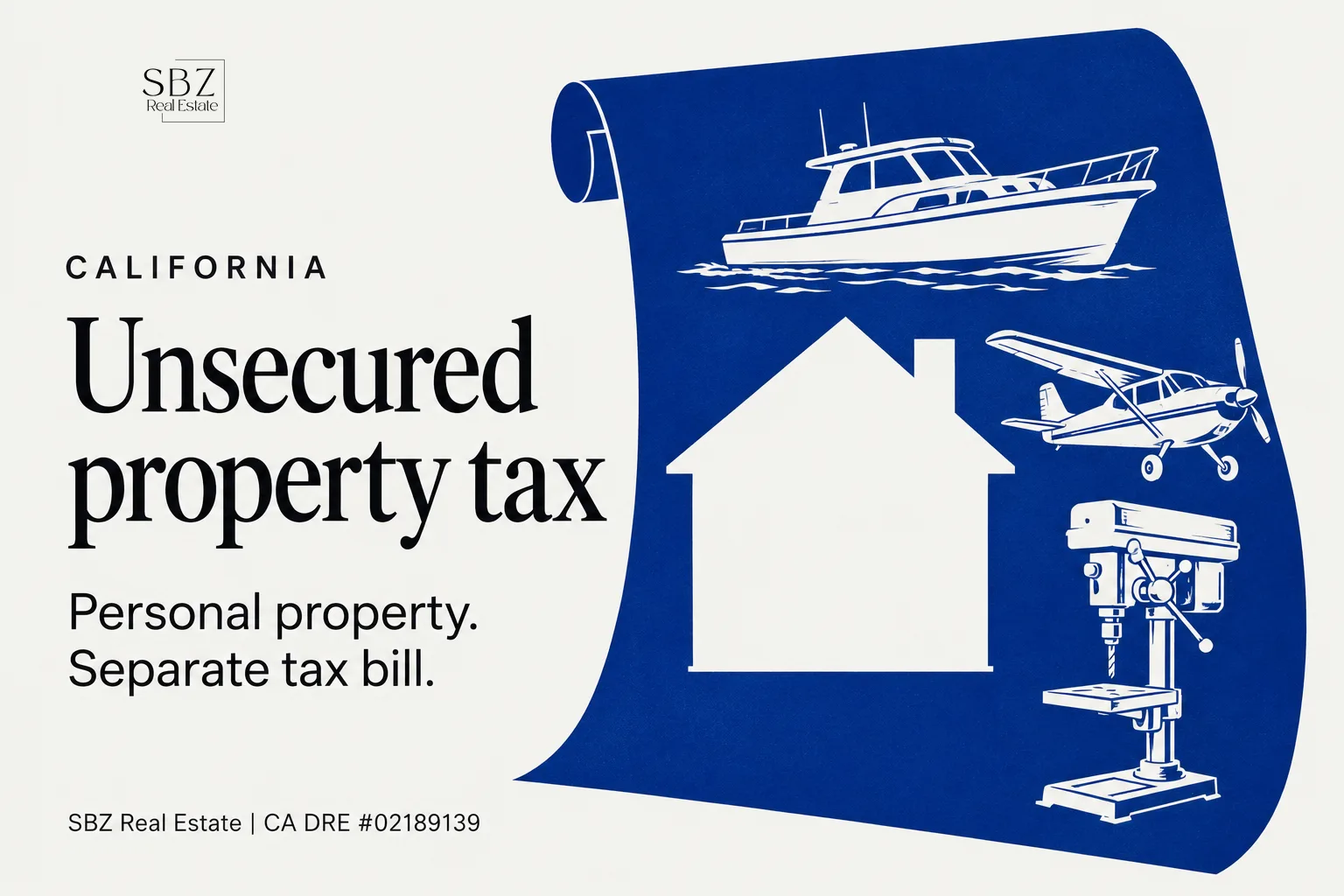
Unsecured property tax in California is a county tax on personal property that isn't attached to land or a building, such as boats, aircraft and business equipment. It's called "unsecured" because no piece of real estate stands behind the bill. If it goes unpaid, the county can't simply attach it to a home the way it does with a standard property tax bill.
Most homeowners never see one. But if you own a business, a rental, a boat or an aircraft, or you're buying or selling property that includes any of those things, it helps to know how this second tax roll works.
What counts as unsecured property?
California counties keep two property tax rolls. The secured roll covers real property: land, buildings and permanent improvements. The unsecured roll covers assessable property that isn't tied to real estate.
Common examples include:
- Boats and vessels (above the exemption thresholds the county applies)
- Aircraft
- Business equipment, machinery, computers and furniture
- Leasehold improvements and certain fixtures owned by a tenant
- Some other items the county assessor classifies as personal property
Your everyday belongings, such as household furniture, clothing and personal vehicles, are generally not taxed this way. Vehicles are covered by registration fees instead.
How is it different from the secured property tax bill?
The main differences are timing, enforcement and what the bill attaches to. The secured bill is what most homeowners know: it follows the parcel and is typically paid in two installments, or through an impound account built into the mortgage payment.
The unsecured bill follows the owner or the business. It arrives separately, usually in the summer, and it isn't paid through escrow or a mortgage impound. Because the bill isn't tied to a parcel, the county has other collection tools. These can include liens on other property you own and, in some cases, collection actions against bank accounts or business assets.
The assessed value is generally the market value of the item as of the January 1 lien date. Property tax law applies a general levy rate to that value, plus any voter-approved local charges. Proposition 13's annual increase cap applies to real property, not to the market-value method used for most personal property.
When is an unsecured property tax bill due?
Unsecured bills are generally due on the lien date, but counties give a grace period. In practice, the bill is mailed in summer and is considered delinquent if it isn't paid by the end of August. After that, penalties apply, and additional monthly interest can begin later in the fall.
Check the exact dates, amounts and penalty rates on your own bill or with the county tax collector, because they're set by statute and counties administer them. In Los Angeles County, that's the Treasurer and Tax Collector. Don't rely on a general article for a payment deadline.
Can an unsecured tax debt affect a home sale?
It can. Unsecured taxes don't automatically attach to your home, but unpaid amounts can become a lien on other property you own once the county records one. That matters when a title company runs a preliminary report during escrow. A recorded tax lien can appear as an item that has to be cleared before the deal can close.
If you're a seller who owns a business or has an old delinquent bill, it's worth checking early. The same goes for anyone planning to sell a rental property that has a tenant-operated business inside it. A surprise on title is far easier to solve at the start of a listing than in the last week of escrow. You can also review what sellers typically pay at closing so nothing catches you off guard.
What should buyers know about unsecured taxes?
If you're buying a home, you're almost always dealing with secured taxes. The things to understand are your new assessed value and any special assessments, such as Mello-Roos taxes. Reassessment after a purchase is also worth understanding. If you're inheriting a house under Prop 19 or transferring your tax base, those rules shape the secured bill, not the unsecured one.
Unsecured taxes become relevant to buyers in a few cases:
- Buying commercial property where a business-owner tenant owes tax on its own equipment
- Buying an income property from an owner who also runs a business there
- Learning that a bill labeled "unsecured" has been sent for a property you own or are purchasing
That last one is worth a call. If a bill for real property shows up on the unsecured roll, ask the county why. The explanation may be legitimate, such as a timing issue, but it should be confirmed.
How can you look up what you owe?
Start with the county. The assessor's office handles the value and the tax collector handles the bill. Both let you search by owner, business name or parcel or account number. For parcel-level research, our guide to a real property search in California walks through where to look.
If a bill looks wrong, the assessor's office is the place to ask about the value. There is a formal appeals process with deadlines, so don't wait until after the due date to raise it. For questions about amounts, penalties or payment plans, contact the tax collector's office directly.
What to do if you've missed a payment
Pay it as soon as you can. Penalties and interest build with time, and a recorded lien is harder to deal with later. If you can't pay in full, ask the tax collector what options exist. If you're in the middle of a sale, tell your escrow officer and your broker right away so the payoff can be handled in the transaction.
This article is general education, not tax or legal advice. For anything specific to your situation, a California CPA or tax attorney is the right call.
If you're weighing a move and want to make sure property taxes of any kind are accounted for, a quick conversation costs nothing. We work with buyers and sellers across Palmdale, Lancaster and the wider Southern California market.
Frequently asked questions
Is unsecured property tax the same as personal property tax?
Largely, yes. In California, "unsecured" is the name for the roll that holds taxes on personal property like business equipment, boats and aircraft. It's the same concept, just labeled by how the county collects it.
Do homeowners in California pay unsecured property tax?
Typically not on the home itself, which is billed on the secured roll. A homeowner may receive an unsecured bill for something else they own, such as a boat, an aircraft or business equipment.
What happens if you don't pay unsecured property tax in California?
Penalties and interest are added, and the county can record a lien or use other collection methods. Because the bill isn't tied to a parcel, the county can pursue other assets you own.
Does an unsecured tax lien show up when selling a house?
It can. If a lien has been recorded against you, the title company will usually find it in a preliminary report, and it may need to be paid off before closing.
Where do I pay or dispute an unsecured property tax bill?
Pay through your county tax collector. To question the assessed value, contact the county assessor, and keep the appeal deadlines in mind.