
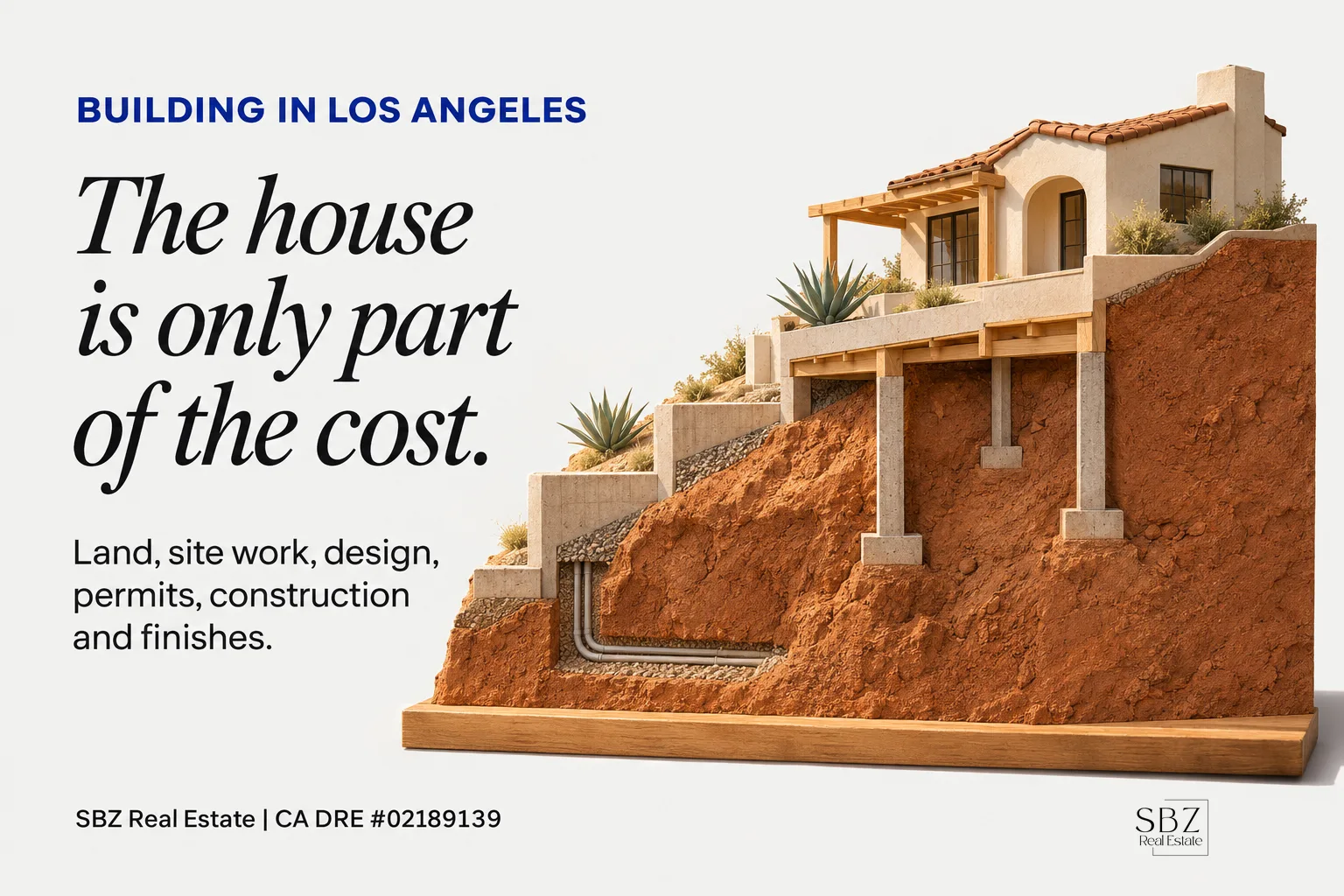
The cost to build a house in Los Angeles is not one figure. It is the sum of land, site work, permits and fees, design, construction, and finishes, and each of those swings widely depending on the parcel and the city. Any single "per square foot" number you see online leaves out at least half of that list.
We don't quote a flat price here, because published averages age quickly and rarely match a specific lot. What follows is how the budget actually breaks down, so you can ask the right questions of a builder, an architect, and your broker before you commit.
How much does it cost to build a house in Los Angeles?
The honest answer is a range, and the range is wide. Two homes of the same size can land far apart because one sits on a flat, graded lot with utilities at the street and the other sits on a hillside that needs retaining walls, a deeper foundation, and a long driveway.
When you collect bids, ask each builder for a written scope that separates hard costs (labor and materials) from soft costs (design, engineering, permits, fees, insurance). Bids that look cheap often just leave items out. Compare them line by line, not by the bottom number.
What are the main cost categories?
Think of the project in six buckets:
- Land. In Los Angeles County this is frequently the largest single line, and it varies enormously by city and neighborhood. If you don't own the lot yet, price it first.
- Site preparation. Demolition of an existing structure, grading, soil work, drainage, and utility connections.
- Design and engineering. Architect, structural engineer, soils report, energy compliance (Title 24), and sometimes a landscape or geotechnical consultant.
- Permits and fees. Plan check, building permit, school fees, and in some jurisdictions impact or utility connection fees.
- Construction. Foundation, framing, roofing, mechanical systems, electrical, plumbing, and insulation.
- Finishes and exterior. Flooring, cabinetry, countertops, fixtures, landscaping, fencing, and driveways.
Add a contingency on top. A common planning habit is to hold a reserve for surprises, because soil conditions and code corrections rarely reveal themselves until work begins.
Why does the cost per square foot mislead people?
Per-square-foot figures are an average of very different projects. They usually cover only the construction bucket, and they hide the effect of lot conditions, design complexity, and finish level. Kitchens, bathrooms, and mechanical systems cost far more per square foot than bedrooms, so a smaller, more complex house can cost more per foot than a larger, simpler one.
Our guide to the cost per square foot to build a home in Southern California explains what that number includes and what it leaves out. If you're curious about smaller footprints, we've also covered the cost to build a 1,500 sq ft A-frame and the cost of a tiny home in California.
What raises the cost on a Los Angeles lot?
Here is what actually matters in this market. These factors move the total more than almost anything you choose inside the house:
- Slope and soil. Hillside lots often require engineered foundations, grading, and retaining walls.
- Utilities. A lot without sewer, water, or power at the street means trenching and connection work. Some areas rely on septic and wells.
- Access. Narrow streets and long driveways raise delivery and equipment costs.
- Fire and hazard zones. Properties in designated high fire hazard severity zones face stricter materials and defensible-space requirements. Other areas have flood or geologic considerations.
- Local review. Some neighborhoods have design review or overlay zones that lengthen the approval process, and time itself carries a cost.
- Existing structure. Tearing down a house adds demolition, and may trigger additional review.
Before you buy any parcel, it helps to know its exact boundaries and easements. We explain what that involves in how much it costs to get land surveyed, and you can pull parcel records using our real property search guide.
Does the city or area change the price?
Yes. Permitting timelines, fees, and rules differ between the City of Los Angeles, other cities in the county, and unincorporated areas. Land values differ even more. A lot in the San Fernando Valley is a different budget from one in the Antelope Valley, and a build near Santa Clarita comes with its own local requirements.
For a wider look at how the county's markets differ, see our overview of real estate in Los Angeles County. Always confirm requirements with the specific city or county building department that will review your plans.
What costs do people forget to budget for?
The construction contract is rarely the whole picture. Plan for:
- Interim housing while the home is built, if you're tearing down where you live
- Construction financing, including interest during the build
- Builder's risk insurance
- Utility upgrades, such as a larger electrical panel
- Landscaping, fencing, and driveway work
- Furniture, window coverings, and appliances if they aren't in the contract
- Property tax changes after completion, since new construction triggers a reassessment. Our explainer on the California property tax exemption covers one piece of that picture.
Is building cheaper than buying?
Not automatically. Building gives you control over layout and systems, but it adds time, risk, and decisions. Buying an existing home or a new-construction home from a builder can be more predictable. We walk through the buyer-side trade-offs in new construction homes in the Antelope Valley, and the same questions apply across Southern California.
A useful test: compare your all-in projected build cost with what comparable finished homes in the area are worth. That's the idea behind after-repair value, and an honest comparison will tell you whether a build makes financial sense on that lot. If you'd rather talk through your situation, our buying team can help you weigh the options.
How should I start budgeting?
- Decide whether you already own a lot or still need to buy one.
- Get a feasibility check on zoning, setbacks, and utilities for that specific parcel.
- Hire a licensed architect or designer and ask for a preliminary scope.
- Collect at least three written bids from licensed California contractors, with hard and soft costs separated.
- Confirm financing, since construction loans work differently from standard mortgages.
- Add a contingency, and don't spend it early.
If you're weighing a build against a purchase, a quick conversation costs nothing. You can reach out to us and we'll help you think it through.
Related reading
Frequently asked questions
What is the average cost to build a house in Los Angeles?
There's no reliable single average, because land, lot conditions, design, and finishes vary so much. Get written bids for your specific parcel and plans rather than relying on a general figure.
How much does it cost to build a house in Los Angeles County?
It depends on the city or unincorporated area, since land prices, permit fees, and review timelines differ across the county. Budget separately for land, site work, soft costs, construction, and a contingency reserve.
Is land included in the cost to build a house?
Usually not. Most construction estimates cover only the building. If you don't already own the lot, the land purchase and any site preparation are additional.
How long does it take to build a house in Los Angeles?
Design, plan check, and permitting can take a significant share of the timeline before construction begins, and the timeline varies by jurisdiction and project. Ask your architect and the local building department for realistic expectations on your parcel.
Do I need a broker if I'm building?
It helps if you're buying the lot, evaluating a teardown, or comparing a build against buying a finished home. A broker can review comparable sales and flag issues before you close.