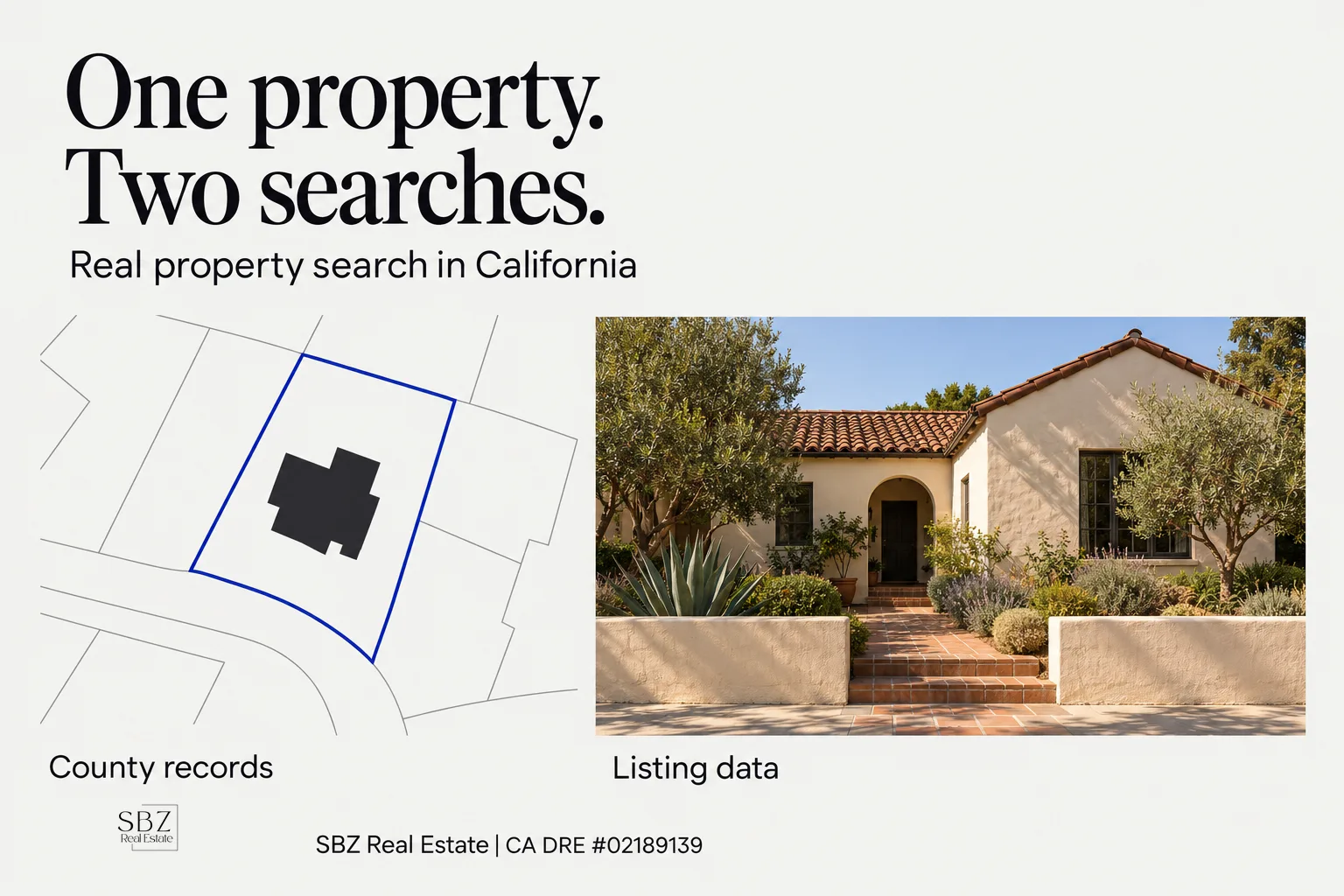
There isn't one single "Los Angeles multiple listing service." Greater Los Angeles is covered by more than one regional MLS, each a members-only database where licensed agents and brokers share listings and sale data. If you're buying or selling here, what matters is how that system touches your move, and what to ask the person representing you.
What is a multiple listing service?
A multiple listing service is a database of properties for sale, maintained by a cooperative of real estate professionals. When a listing broker enters a home, every participating member can see it. That is how a home gets in front of the whole market instead of one brokerage's clients.
If the abbreviation is what brought you here, our explainer on what MLS stands for in real estate covers the basics. Here we focus on how it plays out in the Los Angeles area.
Is there one MLS for all of Los Angeles?
No. Southern California is served by several regional MLS organizations, and their territories overlap. A home in the San Fernando Valley, one in the Antelope Valley, and one in Orange County may not all live in the same database.
In real terms, that has a few consequences:
- Where a home is listed depends on its location and on how the listing broker is set up. A good broker makes sure a listing reaches every system that matters for that property.
- Search results can differ depending on which database a given site or agent is pulling from.
- Data comparisons can vary. Sold-price history and days on the market come from the system the data was entered into.
This is one reason a broker who works across several communities is useful. Our service area spans the Antelope Valley, the Santa Clarita Valley, the San Fernando Valley, Glendale, Burbank, and beyond, so we work with the data that applies to each.
Can the public search the MLS directly?
Not the MLS itself. Access is limited to licensed members who pay dues and agree to the system's rules. What you see on consumer sites such as Zillow, Redfin, and Realtor.com, and on brokerage websites, is generally a copy of listing data shared through an approved feed.
That public view is useful, but it isn't identical to what a member sees. A few differences are worth knowing:
- Members can see detail that isn't shown publicly, such as showing instructions, private remarks to agents, and the listing's full history.
- Public portals can lag behind the MLS, or show a status that has already changed. A home marked "active" online may already be in contract.
- Terms like "contingent," "pending," and "short sale" mean specific things in the listing system. Our guide to listing terms like contingent and short sale explains what each status signals.
How does the MLS help home buyers?
For buyers, the MLS is the most complete picture of what is actually available. A broker can set up searches that alert you the moment a matching home is entered, which matters in a market where good listings draw attention quickly.
It's also where a broker finds comparable sales to help you judge whether an asking price is reasonable. That is the raw material of a comparative market analysis, and it should shape any offer you make.
Our buying guide walks through the full process. One thing to keep in mind: the MLS tells you what's listed, not what's right. Condition, neighborhood fit, and your financing still decide whether a home works for you.
How does the MLS help home sellers?
Putting your home in the MLS is how you reach buyers represented by other brokerages. It also feeds the major consumer sites, so one accurate entry travels widely. The quality of that entry matters:
- Accurate details. Square footage, lot size, permitted improvements, and disclosures should match public records and your own paperwork.
- Strong photos and a clear description. This is the first impression for nearly every buyer.
- The right price and status. Pricing is set from comparable sales, not from hope. See how to price your home to sell in Los Angeles.
We lay out the full process on our selling page. No broker can promise a particular price or timeline, because the market decides both. What we can do is make sure your listing is accurate, well presented, and reaching the right audience.
What about compensation and the MLS?
Rules around how buyer-agent compensation is handled have changed in recent years, and the MLS is part of that story. Compensation is now a conversation to have early and put in writing rather than something assumed. Our articles on California buyer agent commission and how commissions work in California explain who pays what under current practice.
Are there homes that never appear in the MLS?
Yes. Some sellers prefer limited exposure, whether for privacy, timing, or personal reasons. Off-market and quiet-listing arrangements exist, and they come with tradeoffs: fewer buyers see the home, which can affect how it sells. We cover this in off-market homes for sale.
For clients who want discretion, we handle those arrangements personally and can sign an NDA on request. The right choice depends on your goals, and it's worth talking through before you decide.
Who can actually use the MLS on your behalf?
Only licensed professionals who are members. If you're deciding who to hire, it helps to understand the difference between an agent, a broker, and a Realtor. SBZ Real Estate is a licensed California brokerage (DRE #02189139), and we've been in business for 10+ years.
If you're weighing a move, a quick conversation costs nothing. You can reach us here, and we'll tell you honestly what the market looks like for your situation.
Frequently asked questions
Is there an official Los Angeles MLS website I can search?
Not for the public. The MLS itself is members-only, but a licensed broker can send you listings directly, and public portals and brokerage sites display much of the same data.
Why do two websites show different listings for the same area?
Sites pull from different feeds and update on different schedules. Some also cover only certain MLS territories, so results can vary and may lag behind a member's view.
Do I have to use the MLS to sell my house?
No, but it's the most common way to reach the widest group of buyers. Selling privately limits exposure, which is a tradeoff worth discussing with a broker first.
Does being in the MLS guarantee a faster sale?
No. Exposure helps, but price, condition, and market conditions drive results. Anyone promising a specific timeline or price isn't being straight with you.
Can an MLS listing be wrong?
Yes. Entries are made by people, so details like square footage or status can be outdated or mistaken. Always verify important facts independently, especially lot size, permits, and disclosures.